
Baltistan
Baltistan, also known as Baltiyul in local (Balti) language, is a region in Pakistan to the north of Kashmir, bordering The Gilgit valley and the Kohistan district. It is situated in the Karakoram mountains just to the south of K2, the world's second highest mountain. It is dense mountainous region, with an average altitude of over 3,350 m (11,000 ft). Mountains below 6000 meters are not even considered high enough to name in this region as there are numerous 7 thousanders and 4 8 thounsander peaks in this region. Baltistan is inhabited principally by Balti Muslims of Tibetan descent who converted from Tibetan Buddhism earlier than 16th Century. Majority of them are Shia Muslims.
Geography
This article is largely based on the article in the out-of-copyright 11th edition of the Encyclopædia Britannica, which was produced in 1911. It should be brought up to date to reflect subsequent history or scholarship (including the references, if any). When you have completed the review, replace this notice with a simple note on this article's talk page. Thanks!
Karakorum Highway and IndusBaltistan is often called "little Tibet". The adjoining territory of Baltistan forms the west extremity of Tibet, whose natural limits here are the Indus from its abrupt southward bend in 74 45 E., and the mountains to the north and west, separating a comparatively peaceful Tibetan population from the fiercer Aryan tribes beyond. Muslim writers about the 16th century speak of Baltistan as Little Tibet, and of Ladakh as Great Tibet, thus ignoring the really Great Tibet altogether.
The Balti call Gilgit a Tibet, and Dr Leitner says that the Chilasi call themselves But or Tibetans; but, although these districts may have been overrun by the Tibetans, or have received rulers of that race, the ethnological frontier coincides with the geographical one given. Baltistan is a mass of lofty mountains, the prevailing formation being gneiss.
In the north is the Baltoro glacier, the largest out of the arctic regions, 35 miles long, contained between two ridges whose highest peaks to the south are 25,000ft and to the north 28,265ft. The Indus, as in Lower Ladakh, runs in a narrow gorge, widening for nearly 20 m. after receiving the Shyok. The capital, Skardu, a scattered collection of houses, stands here, perched on a rock 7250 ft. above the sea.
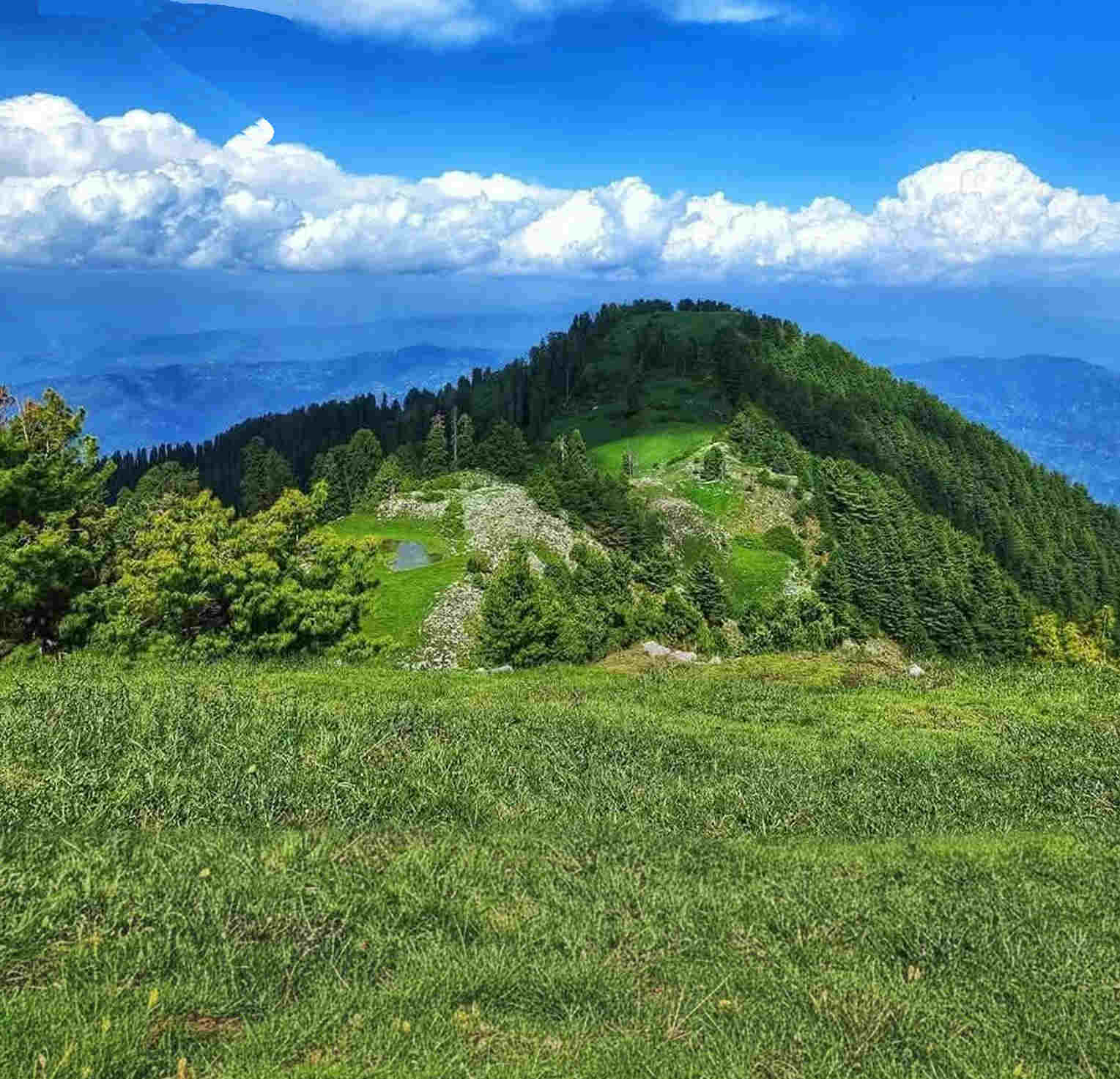
The house roofs are flat, occupied only in part by a second storey, the remaining space being devoted to drying apricots, the chief staple of the main valley, which supports little cultivation. But the rapid slope westwards is seen generally in the vegetation. Birch, plane, spruce and Pinus excelsa appear; the fruits are finer, including pomegranate, pear, peach, vine and melon, and where irrigation is available, as in the North Shigar, and at the deltas of the tributary valleys, the crops are more luxuriant and varied.
Baltistan consists of five valleys namely Kharmang (Kartakhsha), Khaplu, Skardu, Shigar and Rondu (Rongyul). Important villages include Kharmang, Tolti, Ghasing, Mehdi Abad (Parkuta) in Kharmang valley
Balti (بلتی) is a language spoken in Baltistan, in the Northern Areas of Pakistan. Baltistan - before 1948 - was part of Ladakh province. The language is a sub-dialect of Ladakhi and an archaic dialect of the Tibetan language. Many of the consonants that are silent in most modern Tibetan dialects are pronounced in Balti.
Travel & Culture Services Pakistan
220A Panorama center Fatima Jinnah Road KarachiEmail : Click Here To contact us.
| Home | Pakistan Tours | MICE Conferences & Incentives | Hotels | Airfares | Islamabad | Karachi | Lahore | Peshawar | Quetta |
| Sibi | Faisalabad | Multan | Hyderabad | Sukkur | Hunza | Gilgit | Baltistan | Chitral | Swat | Karakorum Highway |
History of Pakistan | Archeology | Weather | Security | Contact Information |


Advertisement
Advertise on this site click for advertising rates