
The Katasraj Temple
Katasraj Temple is one of the two temples of Hindu religion which are said to be from the Shankar god's tears. It is situated in Katas village near Choa Saidanshah in the Chakwal district of Punjab in Pakistan.
The Katasraj Temple is dedicated to lord Shiva, Its said that it existed since the days of Mahābhārata. The Pandava brothers spent a substantial part of their exile at the site. The Pakistan Government is considering nominating the temple complex for World Heritage Site status. In 2007, it also proposed to restore the temple complex. In 2012, the temple pond is drying up due to heavy use of ground water for industrial purposes.
img src="https://www.travel-culture.com/images/katasraj-temples.jpg" width="600" height="340">
History of Katas
The smaller temples, built in pairs around the larger central temple, were built around 900 years or so ago, although the earliest of them dates back to the latter half of the 6th century AD.
The temple complex was abandoned by Hindus when they migrated to East Punjab in 1947 and no one stayed back. The relationship of Hindus with local muslim population was very good. Local muslims even accompanied them to next town Choa Saiden Shah from where the Katas hindu population proceeded further to India. It has always been the site of holy pilgrimage for people of Hindu faith. Even nowadays, worshippers of all Hindu faiths perform pilgrimage to the mandir. The pilgrims bathe in the sacred pool and seek forgiveness as Hindu belief holds that bathing in the pond (especially on certain occasions) leads to the forgiveness of sins and helps attain salvation. Until recently, it was believed that the pond had unlimited depth.
The two semi-ruined temples of the Hindushahiya period (650–950 AD) have been frequently photographed by newspapers and history journals.
Renovation by the Government of Pakistan
For decades the temple complex was in bad state. The holy pond was littered with garbage, while the murals inside the temples disappeared due to the ravages of time and the neglect of the authorities.
In 2006-07, Pakistan decided to place murtis of Hindu gods in the seven mandirs and restore them to their original state to attract visitors.[1] The budget allocated for the project was Rs. 51.06 million. The temple was visited by India's former deputy prime minister Lal Krishna Advani in 2005.[4] The government decided to import idols of Hindu gods from various monuments in India to Pakistan for the restoration. A three-member archaeological team visited neighbouring India, Sri Lanka and Nepal to collect murtis of Hindu gods.img src="https://www.travel-culture.com/images/kataas-raj-temple-chakwal.jpg" width="600" height="450">
Location
The Katasraj mandirs are located 40 kilometres from Chakwal District. It takes a little effort to reach Katasraj by road - one has to go off the M2 motorway - (Islamabad- Lahore) at the Kallar Kahar interchange, Then follow the road to Choa Saidan Shah for 24 km and after passing the cement factory the road passes through the temple complex, with the major temple complex and the pond on the right.
Architecture
The Katas site houses the Satgraha, a group of seven ancient temples, remains of a Buddhist stupa, a few medieval temples, havelis and some recently constructed temples, scattered around a pond considered holy by Hindus.[5] The temples at Katas are mostly constructed on square platforms. The elevation of the sub shrines seems to form a series of cornices with small rows of pillars, crowned by a ribbed dome.
The Ramachandra Mandir is situated to the east of the Hari Singh Haveli and is closed from all sides except for an entrance on the east. The double-storied structure has eight rooms of various dimensions on the ground floor and a staircase at the south leading to the first floor. The mandir has two jharokas (balconies) that have been severely damaged.
The Hanuman Mandir is on the western extreme of a high rectangular enclosure with entrances on the south and the north. The temple's ceiling is undecorated, and lime-plastered.
The Shiva temple is also built on a square platform. Its entrance is a recessed round arch with faint cusps and a rectangular opening to the north.
Legends
The Katasraj temple complex is believed to date back to the Mahabharata era. Many legends are associated with the temples. The five Pandava brothers, heroes of the Sanskrit epic the Mahabharata, stayed here for four of the 13 years they spent in exile. The lake in the complex is believed to have magical powers and is supposed to be where Yudhisthira defeated the Yaksha with his wisdom, bringing his brothers back to life.
Another legend involves the death of Shiva's wife Sati; the story goes that when she died he cried so much and for so long that his tears created two holy ponds - one at Pushkara in Ajmer and the other at Ketaksha, which literally means "raining eyes" in Sanskrit. It is from this name that the word Ketas is derived. Another version of the legend mentions the two pools at Katasraj and Nainital.
Yet another version of the Shiva legend involves the death of Shiva's horse Katas instead of that of Sati his consort. Some legends also state that very first Shiva Ling (Sihv-Ling) was in Kattas. some old manuscripts also consider Katas as the janam bhoomi (birthplace) of Hindu incarnation Rama, as well as that of Ayodhya; but this has become quite controversial.
Prehistoric tools and weapons
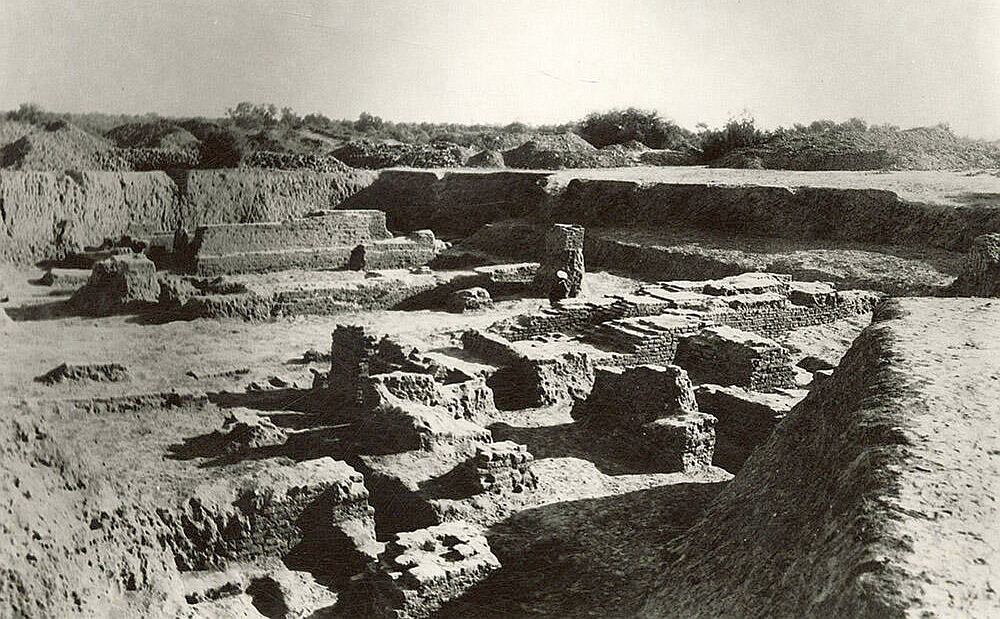
Prehistoric tools and weapons such as axes and knives made of granite, and artifacts like terracotta bangles and pottery have been unearthed at the Katasraj site. The latter have been found to be similar to those excavated in Harappa, but have not been dated for want of expert opinion. The fascinating Salt Ranges have a vast archaeological treasure still hidden underground. The Salt Ranges have also been yielding prehistoric finds. While some local experts place the fossils discovered in the period between 6000 and 7000 BC, the fact remains that they have not yet been examined by trained palaeontologists of international standing. A large number of bones of the limbs and vertebrae of giant animals resembling the extinct mammoth and dinosaur have been found at some sites. “An entire range of low mountains in the area appears to be fossilized, revealing to the naked eye layer upon layer of a variety of plants and soils,” says one writer.
Travel & Culture Services Pakistan
220A Panorama center Fatima Jinnah Road Karachi
Email : Click Here To contact
us.
| Home | Pakistan Tours | Conferences & Incentives |
Hotels | Airfares | Islamabad | Karachi | Lahore | Peshawar | Quetta |
| Sibi |
Faisalabad | Multan | Hyderabad |
Sukkur | Hunza | Gilgit |
Baltistan | Chitral | Swat | Karakorum Highway |
History of Pakistan
| Archeology | Weather
| Security | Contact
Information |

Advertisement
Advertise on this site click for advertising rates