Ibn-e-Safi (Israr Ahmad): A Life in Wit, Mystery, and Urdu Letters
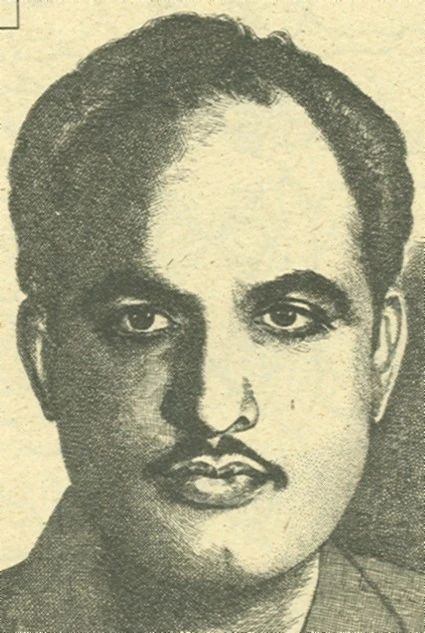
Translated and rendered in English, preserving the literary tone of the original Urdu portrait.
A Multi-Faceted Writer
To cast a fuller light on the personality and literary service of Ibn-e-Safi is to find a writer of many facets: humorist, novelist, and storyteller in one distinctive figure. His name stands at a lively intersection of popular appeal and crafted prose.
Early Life
Ibn-e-Safi’s given name was Israr Ahmad. He was born on 26 July 1928 in Nara (Allahabad, India). He received his early education in Nara and later in Allahabad. From childhood he delighted in spinning stories and losing himself in worlds of imagination. During college he began to write poetry, which appeared in various literary magazines. After the Partition of 1947, he remained in India for some time and began his first literary journey there. In 1952, he migrated to Pakistan and settled in Karachi.
Beginnings as a Writer
At first, Ibn-e-Safi wrote satire and humor that found an eager public. His collection of humorous pieces, Shaairana Hizaiaan (“Poetic Delirium”), showcased his early sensibility in full color. Yet the acclaim that would define his name came from the world of detective fiction.
Jasoosi Dunya and the Imran Series
In 1952 he launched the celebrated series Jasoosi Dunya, introducing unforgettable figures like Colonel Faridi and Captain Hamid—composites of intelligence, courage, wit, and fellow-feeling. In 1955 he began a second arc, the renowned Imran Series, centered on Ali Imran: a singular character whose outward clowning and cultivated foolishness masked a mind of rare brilliance, audacity, and enigma. The Imran Series ensnared both young and adult readers and became among the most widely read cycles in Urdu.
Style and Significance
Ibn-e-Safi’s novels were never “mere” detective tales. They braid humor with psychological insight, scientific imaginings with social questions, and an undercurrent of philosophical inquiry. His language is lucid and graceful; his dialogues are lively, spontaneous, and memorable. He gave his era’s readers not only entertainment but also a subtle intellectual prod.
Personal Life and Hardships
At one stage of his life, Ibn-e-Safi faced mental stress and illness. In the 1960s he fell seriously unwell and remained away from the literary scene for several years. Yet upon recovery he returned with the same vigor and creative verve—a testament to his willpower and artistic stature.
Passing
Ibn-e-Safi passed away on 26 July 1980 in Karachi. His death was a great loss to Urdu literature; he had ruled the hearts of countless readers.
Literary Legacy
Across his career, Ibn-e-Safi wrote approximately 245 novels. His characters live on, and his books are still read with enthusiasm. His creations won immense popularity not only in Pakistan but also in India, and his works have been translated into several languages. Readers of Urdu can rightly claim the privilege of a master like Ibn-e-Safi, who brought craft and enduring value to popular literature.
© 2025 Travel & Culture Services — All rights reserved.