Mughal Lahore Beyond the Walled City: Chauburji, Zeb-un-Nisa's Garden and the Forgotten Heritage of Nawankot
A journey through the lesser-known Mughal monuments, forgotten gardens and historical mysteries of Lahore.
Many people are unaware that Mughal Lahore extended far beyond the historic Walled City. Although the old city was enclosed within its famous twelve gates, the Mughals also commissioned magnificent gardens, gateways and other structures outside its fortified boundaries.
Among the best-known examples are Shalimar Gardens, Bagh-e-Da Lado, and the garden of Shamnagar, associated with the area around Chauburji. Yet there is another forgotten garden in Nawankot, traditionally associated with Princess Zeb-un-Nisa, which remains largely unknown to many residents and visitors of Lahore.
Today, we take a closer look at this lesser-known heritage, sometimes referred to as a Deorhi, and explore the history, architecture and mysteries surrounding this part of Mughal Lahore.
Join us on this historical and photographic journey through Chauburji, Chhoti Chauburji and the monument traditionally associated with Princess Zeb-un-Nisa.
Chauburji, Chhoti Chauburji and the Tomb of Zeb-un-Nisa: Unanswered Questions of History
There are several monuments in Lahore that we have seen for generations, yet their original purpose, historical associations and identities remain subjects of debate. Chauburji, Chhoti Chauburji and the structure commonly known as the Tomb of Princess Zeb-un-Nisa are among these fascinating landmarks.
I have been fortunate to meet Mr. Saif-ur-Rehman Dar on several occasions and have had some very interesting conversations with him. His knowledge and insights helped me develop a better understanding of Nawankot and its historical significance.
Chauburji: The Magnificent Gateway of Mughal Lahore
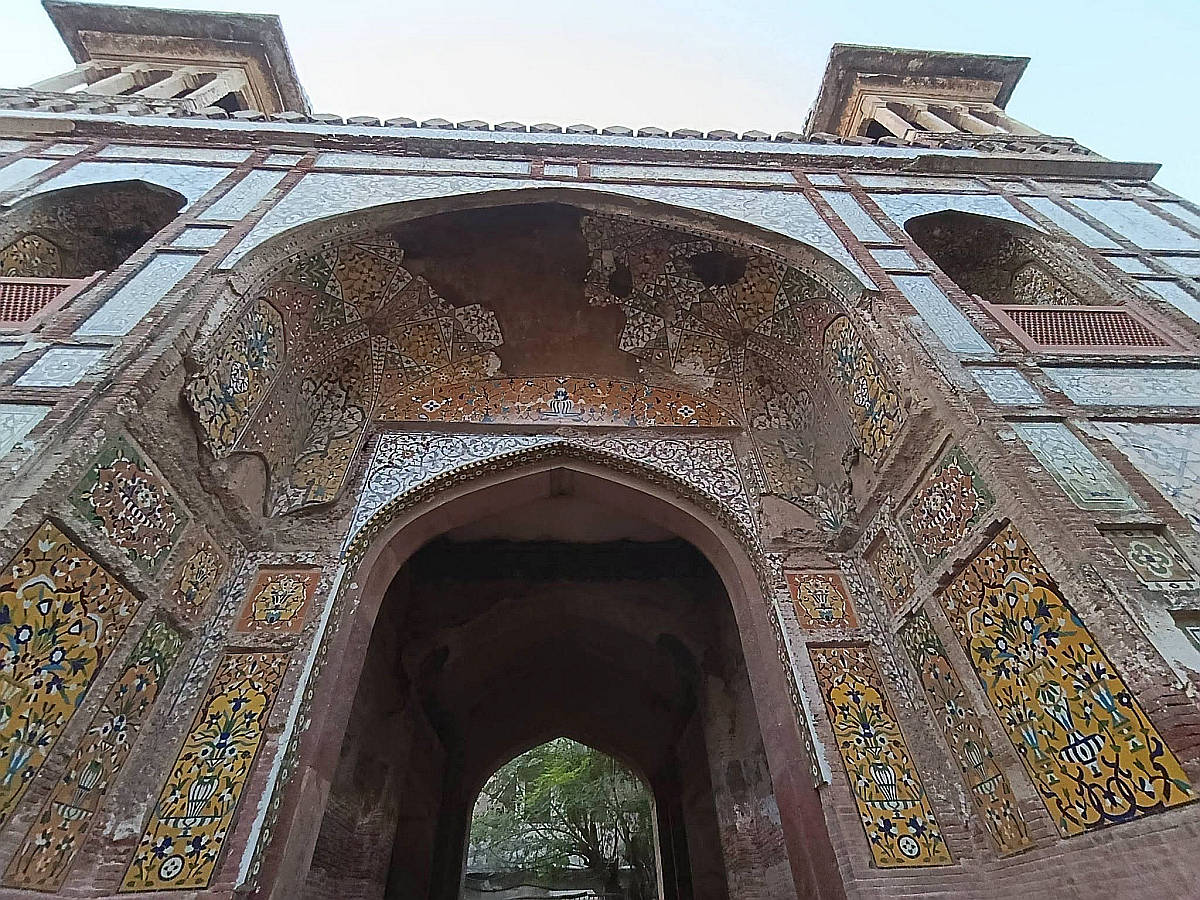
Chauburji is one of Lahore's most distinctive historical monuments. Its unusual architectural design immediately attracts attention. According to popular historical tradition, the structure once served as the grand entrance to an extensive Mughal garden, traditionally associated with Princess Zeb-un-Nisa, the daughter of Emperor Aurangzeb Alamgir.
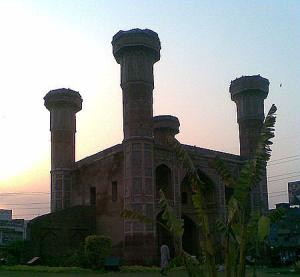
The monument originally featured four impressive towers at its corners, giving rise to the name Chauburji. The name is derived from two words: Chahar, meaning four, and Burj, meaning tower.
In 1843, a severe earthquake damaged the northwestern tower, which subsequently collapsed. Cracks also appeared in the central structure. Restoration work was undertaken in later years to preserve this remarkable monument.
One of Chauburji's most interesting features is its architectural treatment. While the lower section appears relatively simple, the upper portions display intricate brickwork, decorative patterns and ornamental details. At a time when marble was prominently used in many imperial Mughal buildings, the extensive and artistic use of brick gave Chauburji a distinctive character.
Its four-towered design also brings to mind the famous Charminar of Hyderabad, Deccan, commissioned by Muhammad Quli Qutb Shah in 1591. Four-tower architectural arrangements were used in different forms across the architectural traditions of the Indian subcontinent.
However, the identity of the original patron and the exact garden for which Chauburji was constructed remain matters of historical discussion. Some researchers associate the monument with Princess Zeb-un-Nisa, while others have suggested a possible connection with Jahanara Begum, the daughter of Emperor Shah Jahan.
The Forgotten Garden of Zeb-un-Nisa in Nawankot
Beyond Chauburji, another historical structure stands along Multan Road, beyond Samanabad Mor. It is commonly known as the Tomb of Princess Zeb-un-Nisa. Part of the structure is visible from the main road, while other surviving remains are tucked away within the surrounding streets and neighbourhood.
According to historical traditions, the structure was once part of the entrance complex of Bagh-e-Zeb-un-Nisa, or the Garden of Zeb-un-Nisa. It is believed that this garden covered a considerable area around Nawankot, extending towards the historic city of Lahore.
It is difficult today to imagine the original scale and beauty of this garden. Over the centuries, much of its land has disappeared beneath expanding residential neighbourhoods, roads and urban development. What once may have been an impressive Mughal landscape has largely vanished from the modern city.
Who Was Princess Zeb-un-Nisa?
Princess Zeb-un-Nisa was the eldest daughter of Mughal Emperor Aurangzeb Alamgir. She was born on 15 February 1638 in Daulatabad, Deccan. Her mother, Dilras Banu Begum, belonged to the Safavid royal family of Persia.
Zeb-un-Nisa was much more than a Mughal princess. She was an accomplished scholar, poet and literary figure who developed a reputation for her intellectual interests. Historical accounts state that she memorised the Holy Quran at a young age.
Her literary interests and association with Persian poetry made her an important cultural personality of her time. She is also remembered by her literary pen name, Makhfi.
Princess Zeb-un-Nisa died in 1702, but the location of her final resting place remains a subject of disagreement among historians. Some accounts associate her burial with Lahore, while others suggest Delhi.
I have had the opportunity to visit Delhi, but unfortunately, I could not visit the grave traditionally associated with her during my trip.
Was the Monument Really the Tomb of Zeb-un-Nisa?
Several historical writers, including Maulvi Noor Ahmad Chishti, Kanhaiya Lal, Syed Muhammad Latif and others, have recorded traditions connecting Princess Zeb-un-Nisa with Lahore. Nevertheless, the available historical evidence has not conclusively established the location of her burial.
Another account suggests that after the completion of Chauburji, Princess Zeb-un-Nisa entrusted the monument to her favourite attendant, Mian Bai. Some traditions also associate the garden with Mian Bai rather than directly with the princess.
Questions have also been raised about the construction date traditionally associated with the monument, particularly when considered alongside the young age of Princess Zeb-un-Nisa at the time.
Some researchers have even suggested that the structure commonly called the Tomb of Zeb-un-Nisa may actually be the resting place of Mian Bai. Unfortunately, very little reliable historical information about Mian Bai survives today. Much of her association with the monument comes from traditions connected with an inscription at Chauburji.
These uncertainties make the history of Chauburji, Bagh-e-Zeb-un-Nisa and the Nawankot monument particularly intriguing. Their original identities and associations deserve further historical investigation.
Another Zeb-un-Nisa: The Forgotten Story of a Mughal Royal Nurse
There is another interesting historical connection that deserves attention. Mughal history records several women who played important roles in the upbringing of royal princes and princesses. These royal nurses and wet nurses were often granted exceptional respect and status within the imperial household.
One of the best-known examples is Dai Anga, whose name remains associated with important Mughal monuments in Lahore.
According to historical traditions, a woman named Zeb-un-Nisa, also referred to in some accounts as Zub-un-Nisa, played a role in the upbringing of Prince Khurram, who later became Emperor Shah Jahan. It is said that she breastfed the young prince and was subsequently honoured with the title and position of Dai Anga.
Emperor Shah Jahan reportedly held Dai Anga in great affection and respect. According to traditions associated with her, he commissioned Gulabi Bagh in Lahore in her honour. Following her death, she was buried there, and a beautiful tomb was constructed over her grave.
This story introduces another fascinating dimension to Lahore's Mughal heritage and reminds us that historical names and family relationships can sometimes create confusion when researching old monuments.
Exploring the Forgotten Deorhi of Nawankot
With the assistance of our friend, Mr. Ashfaq Khan, one of Pakistan's senior tour guides, our Nomad Group managed to reach the entrance gateway of this historical complex. Unfortunately, much of the original structure has disappeared, and only limited remains survive today.
Thanks to the efforts of the Department of Archaeology, a considerable portion of this cultural heritage has been saved. The condition of the monument was extremely poor only five years ago, and without conservation efforts, even more of its surviving structure might have been lost.
Such monuments remind us that Lahore's history does not end at the gates of its old fortified city. Important traces of its Mughal past remain scattered across neighbourhoods that have gradually become part of the modern urban landscape.
Historical Sources and Acknowledgements
In preparing this article, I consulted and benefited from the writings and research of several historians and researchers, including Kanhaiya Lal, the Lahore Gazetteer, Talha Shafiq, Khan Waliullah and the respected Mr. Ahmed Saeed, with whom I had the privilege of meeting on several occasions over the years at the Punjab Public Library.
I am also grateful to Mr. Saif-ur-Rehman Dar for his valuable conversations and insights into Nawankot's history, and to Mr. Ashfaq Khan for helping our Nomad Group explore the surviving remains of this forgotten heritage.
I hope readers will appreciate this humble effort to bring lesser-known aspects of Lahore's history to wider attention. Your encouragement will inspire me to continue sharing more historical discoveries and photographic journeys in the future.
Lahore: A Story Behind Every Old Brick
This is Lahore, a city where almost every old brick has a story to tell. Its Mughal gardens, forgotten gateways, historic tombs and ancient neighbourhoods preserve memories of a remarkable past.
Sadly, the Lahore that was once a magnificent historic city increasingly resembles a crowded urban settlement. Many of its historical treasures remain hidden in plain sight, waiting to be rediscovered, documented and protected.
Perhaps the greatest tribute we can pay to Lahore is to remember its history before more of it disappears.
Research and Photography: Adil Lahori