Autumn in Hunza Valley – The Golden Season of Northern Pakistan
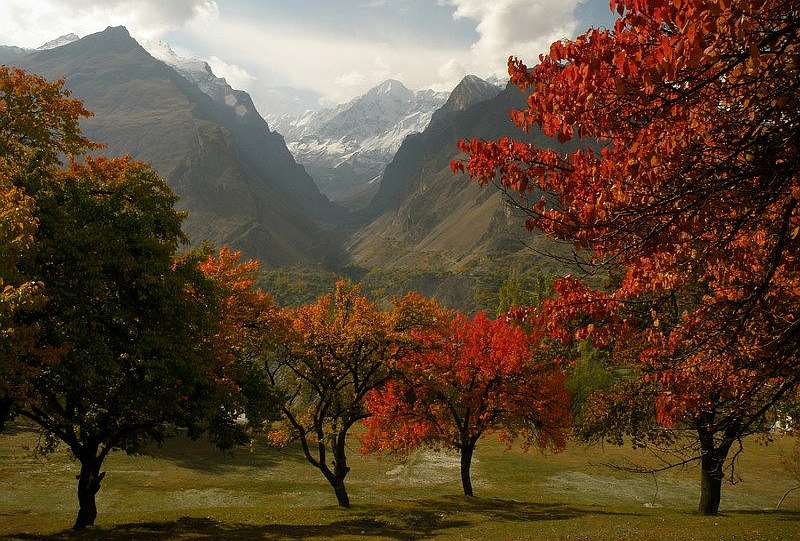
There are many reasons to visit Hunza Valley, but autumn is perhaps the season when the valley becomes most extraordinary. From the orchards around Karimabad to the tall poplar trees lining the villages, the landscape changes from summer green into shades of gold, yellow, orange, amber and red.
Behind this spectacular display rise some of the world's most dramatic mountains. The result is a remarkable combination of colorful trees, traditional villages, terraced fields, glaciers and the towering peaks of the Karakoram.
Why Autumn in Hunza Is So Special
Hunza is beautiful throughout the year, but autumn gives the valley a completely different character. The summer greenery gradually disappears and the orchards and poplar trees begin changing color. The contrast between the warm autumn foliage and the rugged mountain landscape makes Hunza particularly attractive to photographers and travelers looking for something beyond the usual summer scenery.
The autumn landscape is especially impressive because Hunza is a high mountain valley. Golden trees appear beside dry rocky slopes, ancient settlements and snow-covered peaks, creating a landscape that looks almost unreal.
Recent travel guides generally place the main autumn display from late September into early November, with October often regarded as the peak period. The exact dates are not fixed: foliage changes according to altitude, local weather and the particular year.
When Is Autumn in Hunza Valley?
For travelers planning a Hunza autumn tour, the most useful general rule is to consider late September through early November.
- Late September: Early autumn colors may begin appearing, particularly at higher elevations.
- Early October: More trees begin changing color and the valley starts taking on its golden appearance.
- Mid-October: Usually one of the strongest periods for autumn scenery.
- Late October: Often an excellent period for photographers and travelers seeking intense autumn colors.
- Early November: Colors can remain beautiful, although some trees may have already lost their leaves.
- Mid-November onward: The landscape becomes considerably colder and the autumn display begins giving way to winter.
The peak does not arrive everywhere at exactly the same time. Higher and lower locations can change at different speeds, so travelers should allow some flexibility when planning an autumn photography trip.
Hunza in October – The Peak Autumn Experience
October in Hunza is particularly popular because it combines spectacular foliage with generally good conditions for sightseeing. The trees around the villages and orchards develop strong autumn colors while the surrounding Karakoram peaks provide a dramatic backdrop.
The second half of October is often especially attractive. However, visitors should not expect every tree to change on exactly the same date. Nature does not follow a fixed tourism calendar, and the timing can vary from one year to another.
The clear, crisp mountain atmosphere can also produce excellent views of the surrounding peaks. For photographers, early morning and late afternoon can be particularly rewarding because the low-angle sunlight emphasizes the texture of the mountains and the colors of the trees.
Best Places to See Autumn Colors in Hunza
Karimabad
Karimabad is the cultural heart of central Hunza and one of the best bases for exploring the valley. In autumn, its surrounding orchards and traditional settlements become filled with warm colors. The area around Baltit Fort provides particularly impressive views over the valley.
Altit
The historic village of Altit combines traditional architecture, agricultural terraces and mountain scenery. Autumn adds another layer of color to the old settlement and surrounding orchards.
Duikar
Duikar is one of the classic viewpoints around Hunza. From its elevated position, visitors can look across the valley toward the surrounding mountains. Sunrise and sunset can be particularly spectacular in autumn.
Aliabad and the Central Hunza Villages
The villages and agricultural areas around Aliabad offer a closer look at everyday life in Hunza. Autumn is also harvest time, making this an interesting period to observe local agriculture and traditional village life.
Attabad Lake
Attabad Lake is one of the most recognizable landscapes of Upper Hunza. The turquoise water, barren mountains and autumn vegetation around the valley create a striking contrast.
Gulmit and Passu
Continuing toward Upper Hunza brings travelers to Gulmit, Passu and other settlements along the Karakoram Highway. The combination of autumn trees, village landscapes and the dramatic Passu mountain scenery makes this section particularly rewarding.
Autumn, Harvest and Hunza Culture
Autumn in Hunza is not only about colorful scenery. It is also an important agricultural season. The orchards that give Hunza much of its visual character are closely connected to the traditional life of the valley.
Depending on the timing of your visit, you may see agricultural activity associated with fruit and nut production, particularly around the traditional villages. This gives autumn travelers an opportunity to experience Hunza as a living cultural landscape rather than simply a mountain destination.
Walking through the villages, meeting local people and observing traditional architecture can be just as memorable as photographing the mountains.
Photography in Hunza During Autumn
Hunza autumn photography is one of the main reasons international visitors choose this season. The valley provides an unusual combination of colors and scale: golden trees in the foreground, traditional villages in the middle distance and enormous Karakoram peaks beyond.
Some of the best subjects include:
- Golden poplar-lined roads and villages
- Autumn orchards around Karimabad and Altit
- Baltit Fort surrounded by autumn foliage
- Traditional Hunza houses and agricultural terraces
- Rakaposhi and other Karakoram peaks
- Attabad Lake and Upper Hunza
- Passu and the surrounding mountain scenery
- Local people and traditional village life
A wide-angle lens is useful for landscapes, while a telephoto lens can help isolate mountain peaks and village details. Even a smartphone can produce excellent photographs because the colors and mountain scenery provide naturally strong compositions.
Weather in Hunza During Autumn
Autumn weather in Hunza is generally more comfortable during the daytime than winter, but conditions become increasingly cold as the season progresses. Days can be sunny while mornings and evenings are distinctly chilly.
Conditions also vary considerably with elevation. A traveler should therefore be prepared for different temperatures during excursions to higher areas such as Khunjerab and other mountain locations.
Autumn is consequently a good season for sightseeing and photography, but visitors should not make the mistake of packing only light clothing because the afternoons can be pleasant.
What to Pack for an Autumn Trip to Hunza
A layered clothing system is the easiest way to travel comfortably in the mountains.
- Warm fleece or sweater
- Light to medium-weight jacket
- Warm jacket for higher elevations and cold evenings
- Comfortable walking shoes or hiking shoes
- Warm socks
- Sunglasses
- Sunscreen
- Small daypack
- Camera and spare batteries or power bank
- Personal medicines and basic travel essentials
If you are traveling in late October or November, bring warmer clothing than you would need for an early October visit.
How to Travel to Hunza in Autumn
Most road journeys to Hunza involve traveling along the spectacular Karakoram Highway. The journey itself is an important part of the experience, passing through dramatic mountain scenery on the way toward Gilgit and Hunza.
A road journey also provides flexibility for stopping at viewpoints and photographic locations. Because mountain travel is affected by weather, road conditions and local circumstances, travelers should keep their itinerary reasonably flexible.
Our 7 Days Hunza Gilgit Tour
For travelers who want to experience Hunza without organizing every part of the journey independently, Travel & Culture Services offers a 7 Days Hunza Gilgit Tour.
The tour combines Gilgit and Hunza with the spectacular journey along the Karakoram Highway, giving visitors an opportunity to experience the mountains, local culture and scenery of northern Pakistan.
The itinerary includes time in Gilgit and Hunza, with visits and excursions around the valley and the Upper Hunza region. The route can be particularly attractive during the autumn season when the landscape is transformed by golden foliage.
View our 7 Days Hunza Gilgit Tour
The tour can also be discussed with us if you are specifically interested in traveling during the autumn foliage period. Since the exact timing of the colors changes from year to year, we can advise you on suitable dates and help tailor the journey to your interests.
How Many Days Should You Spend in Hunza?
A week is a good starting point for travelers visiting Hunza from Islamabad because the journey to and from the valley itself takes time. A seven-day itinerary allows travelers to experience the Karakoram Highway, Gilgit and the principal attractions of Hunza rather than rushing through the valley.
Travelers particularly interested in photography, hiking, village life or simply enjoying the scenery may prefer to add several extra nights in Hunza.
Practical Tips for Visiting Hunza in Autumn
- Book early for peak October dates. Autumn is a popular season, particularly around the middle and second half of October.
- Keep your dates flexible if possible. The exact foliage peak varies from year to year.
- Bring warm layers. Sunny afternoons can be misleading because mornings and evenings can be cold.
- Start sightseeing early. Morning light is excellent for photography and mountain views.
- Allow extra travel time. Mountain roads can take longer than expected.
- Do not focus only on famous viewpoints. Some of the most memorable experiences come from walking through villages and orchards.
- Respect local communities. Ask before photographing people and be considerate when walking through agricultural areas.
- Check road and weather conditions before departure. Conditions in the high mountains can change quickly.
Is Autumn the Best Time to Visit Hunza?
There is no single best season for everyone. Summer is excellent for trekking and for exploring many high mountain areas, while spring brings flowers and fresh greenery. Winter offers a very different, quieter and colder Hunza.
But if your priority is autumn colors, photography, mountain scenery and comfortable sightseeing, autumn is difficult to beat. October in particular offers one of the most visually impressive landscapes in Pakistan.
The golden trees, clear mountain atmosphere and snow-covered Karakoram peaks make Hunza Valley in autumn an experience that stays with travelers long after they have returned home.
Frequently Asked Questions About Autumn in Hunza
When is the best time to see autumn colors in Hunza Valley?
The main autumn season generally runs from late September through early November. Mid-to-late October is usually one of the best periods for widespread autumn colors, although the exact timing varies with altitude and weather.
Is October a good month to visit Hunza?
Yes. October is one of the most attractive months for Hunza, particularly for travelers interested in autumn foliage, photography, mountain scenery and cultural sightseeing.
What is the weather like in Hunza during autumn?
Autumn days can be sunny and pleasant, but mornings and evenings become increasingly cold. Higher elevations are colder, so travelers should bring warm layers and a suitable jacket.
What places should I visit in Hunza during autumn?
Karimabad, Baltit Fort, Altit, Duikar, Aliabad, Attabad Lake, Gulmit, Passu and Upper Hunza are among the places worth including in an autumn itinerary.
Is Hunza good for photography in autumn?
Yes. Autumn is an excellent season for photography because colorful trees and orchards are set against the dramatic Karakoram mountains. Early morning and late afternoon often provide particularly attractive light.
What should I wear in Hunza in October?
Wear layers and carry a sweater or fleece together with a warm jacket. Comfortable walking shoes, sunglasses and sunscreen are also recommended.
How many days are enough for a Hunza autumn trip?
Seven days provides a good introduction to Gilgit and Hunza, including the journey along the Karakoram Highway. Travelers with more time can extend their stay for photography, hiking and village exploration.
Can I take a 7 Days Hunza Gilgit Tour during autumn?
Yes. Travel & Culture Services offers a 7 Days Hunza Gilgit Tour and can discuss suitable autumn dates with travelers. Visit the tour page for the current itinerary, pricing and booking information.
Plan Your Autumn Journey to Hunza
If you have always wanted to see the famous golden landscapes of Hunza, autumn is the time to make the journey. The combination of traditional villages, ancient forts, orchards, golden poplars and the enormous Karakoram mountains makes this one of Pakistan's most memorable travel experiences.
Travel & Culture Services has been organizing tours in Pakistan since 1997. Contact us if you would like to plan a private or group journey to Hunza during the autumn season.