
Mohra Moradu Monastery
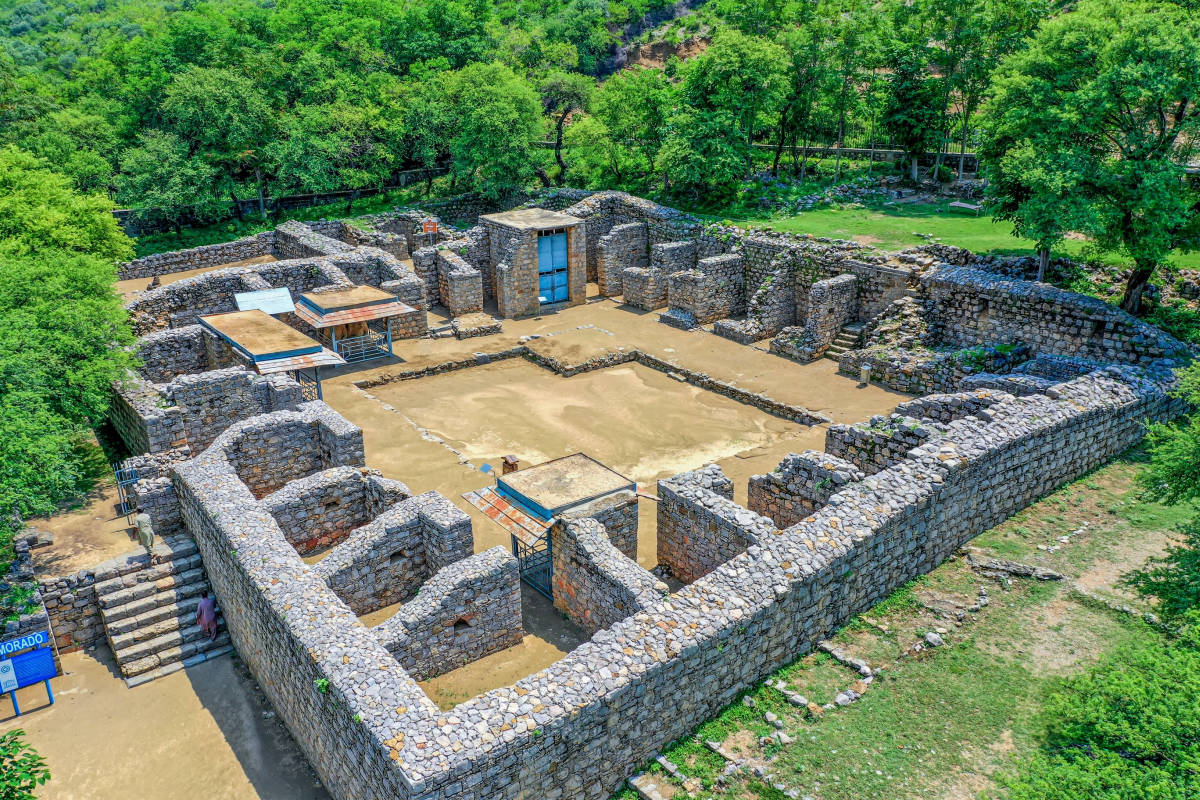
The ruins of Mohra Moradu lie about 1.6 kilometres to the south-east of the city of Sirsukh at the back of the village of Mohra Moradu. When first discovered, both monastery and stupa were buried in a deep accumulation of detritus from the surrounding hills, the only part of the structures visible to the eye being about 1.5 meters of the ruined stupa, which in years gone by had been cut in twain by treasure-hunters in search of the relics.
Apparently, the whole surface of the structure up to the top of the drum was covered with figures. In the bays between the pilasters, and on the face of the pilasters themselves were series of Buddhas arranged one above the other. Among the many detached heads found round the base of this stupa and now displayed in the museum, it is standing at a height of 3.6 meters and is circular in plan, its plinth being divided into five tiers, with elephants and Atlantes alternating in the lowest tier, and Buddhas seated in niches alternating with pilasters in the tiers above.
More About Mohra Moradu
Mohra Moradu is one of the most beautifully preserved Buddhist monasteries in the Taxila valley. The site dates back to the Kushan period and showcases the artistic mastery of Gandhara sculptors. The monastery complex includes a main stupa, votive stupas, monks’ cells, and a courtyard that once served as a meditation area. The carvings of elephants and Buddhas symbolize strength and enlightenment, reflecting the spiritual depth of early Buddhist architecture.
Artifacts discovered here, including Buddha heads and decorative panels, are now housed in the Taxila Museum, offering visitors a glimpse into the craftsmanship and devotion of ancient artisans.
Visit Mohra Moradu Monastery
Travel & Culture Services offers a daily Islamabad–Taxila tour that includes Mohra Moradu, Dharmarajika Stupa, Jaulian Monastery, and the Taxila Museum. The tour provides expert English-speaking guides with deep knowledge of Buddhist history and Gandhara art.
For bookings and inquiries, visit Travel & Culture Services – Taxila Tour or contact via WhatsApp at +923212424778.
Further reading
Mohra Moradu comprises a main stupa with a subsidiary stupa to the right of its flight of stairs. Opposite the main stupa are the dwelling places for monastic members, consisting of 27 cells. One of the cells is dedicated to a stupa. The complex also includes a water tank, washroom, kitchen, refectory, and assembly hall.
It was excavated in 1915-16 under Sir John Marshall. According to the diaper style of the masonry, this site dates to the 2nd century, characterized by large diaper masonry. It continued to be used, after renovations in late semi-ashlar style, until the 4th-5th century. Many coins of Kushān kings–from the periods of Huvishka and Vāsudeva–were found on the monastery floor.
Stucco reliefs attached to the stupa wall are well preserved and have been removed to the Taxila Museum. Among the findings is one exquisite standing Bodhisattva Maitreya made of phyllite, measuring 102 cm in height.


Advertisement
Advertise on this site click for advertising rates