
From Durand Line to TTP: A Chronological History of Pakistan–Afghanistan Tensions
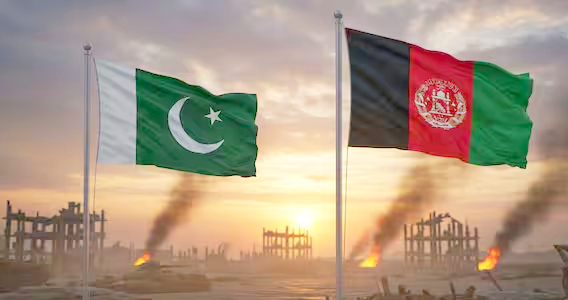
Border tensions between Pakistan and Afghanistan are not new. The roots of the dispute stretch back over a century and involve colonial agreements, ethnic divisions, regional geopolitics, and modern militancy.
1857 – The War of Independence and Appeals to Afghanistan
During the 1857 uprising against British rule, some Muslim leaders in northern India reportedly sought support from Afghanistan, hoping for military assistance against the British Empire.
It is historically important to clarify that Ahmad Shah Abdali (Ahmad Shah Durrani), founder of the Durrani Empire, had died in 1772 and therefore was not alive during 1857. Afghanistan at that time was ruled by Dost Mohammad Khan.
The Afghan leadership chose caution and did not intervene militarily in the conflict. This decision reflected Afghanistan’s strategic concerns about confronting British power directly.
1893 – The Durand Line Agreement
In 1893, the Durand Line Agreement was signed between British India and Amir Abdur Rahman Khan of Afghanistan. The agreement established a 2,600-kilometer boundary dividing Pashtun tribal regions.
After Pakistan’s creation in 1947, this line became the international border. Pakistan recognizes it as a legitimate boundary, while successive Afghan governments have questioned its validity.
1947 – Pakistan’s Independence and the Pashtunistan Issue
Afghanistan was the only country to vote against Pakistan’s admission to the United Nations in 1947. The issue of “Pashtunistan” — advocating autonomy or independence for Pashtun regions — intensified early diplomatic tensions.
1979–1989 – Soviet Invasion of Afghanistan
Following the Soviet invasion in 1979, Pakistan became a frontline state supporting Afghan resistance groups. Millions of Afghan refugees entered Pakistan, reshaping the social and security landscape of the border regions.
1996–2001 – Taliban’s First Government
Pakistan was among the few countries that officially recognized the Taliban government during its first rule in Afghanistan. Regional militancy networks grew increasingly complex during this period.
2001 – U.S. Intervention
After the September 11 attacks, the United States invaded Afghanistan. Pakistan aligned with the U.S. in the War on Terror, while Afghan governments frequently accused Pakistan of supporting insurgent elements — claims Pakistan denied.
2007 Onward – Emergence of TTP
The Tehreek-e-Taliban Pakistan (TTP) emerged as a militant organization targeting Pakistan. Islamabad has accused TTP of operating from Afghan territory. Afghan authorities have denied facilitating cross-border attacks.
2020 – Doha Agreement
Pakistan facilitated negotiations between the United States and the Afghan Taliban, leading to the Doha Agreement, which paved the way for U.S. withdrawal.
2021 – Taliban Return to Power
After U.S. withdrawal, the Taliban returned to power in Kabul. While expectations existed that security cooperation would improve, tensions resurfaced over cross-border militancy allegations.
Recent Escalations
Recent border clashes and accusations of supporting militant groups have once again raised tensions. However, such incidents have historically remained localized to border areas.
Conclusion
The tensions between Pakistan and Afghanistan are rooted in historical agreements, ethnic realities, and modern security challenges. While periodic escalations occur, full-scale war has historically been unlikely due to regional diplomacy and economic considerations.
Understanding this complex history helps separate temporary political tensions from long-term regional realities.
Written by: Jamal Panhwar
Travel & Culture Services


Advertisement
Advertise on this site click for advertising rates