

Jhang Pakistan Travel Guide – History, Heer Ranjha, Sultan Bahu and Trimmu
Jhang is one of the historic cities of central Punjab, Pakistan, situated in the fertile region between the Chenab and Jhelum rivers. The city and its surrounding district have a remarkable combination of history, Sufi traditions, Punjabi folklore, river landscapes and agricultural culture.
Jhang is perhaps best known throughout South Asia for the legendary love story of Heer and Ranjha, one of the great romances of Punjabi literature. The district is also associated with the famous Sufi saint Hazrat Sultan Bahu, whose shrine at Garh Maharaja attracts devotees from across Pakistan.
The meeting of the Jhelum and Chenab rivers at Trimmu, historic Shorkot, old bridges, Sufi shrines and the traditional villages of the Jhang region provide numerous opportunities for travelers interested in the cultural landscape of Punjab.
Where is Jhang?
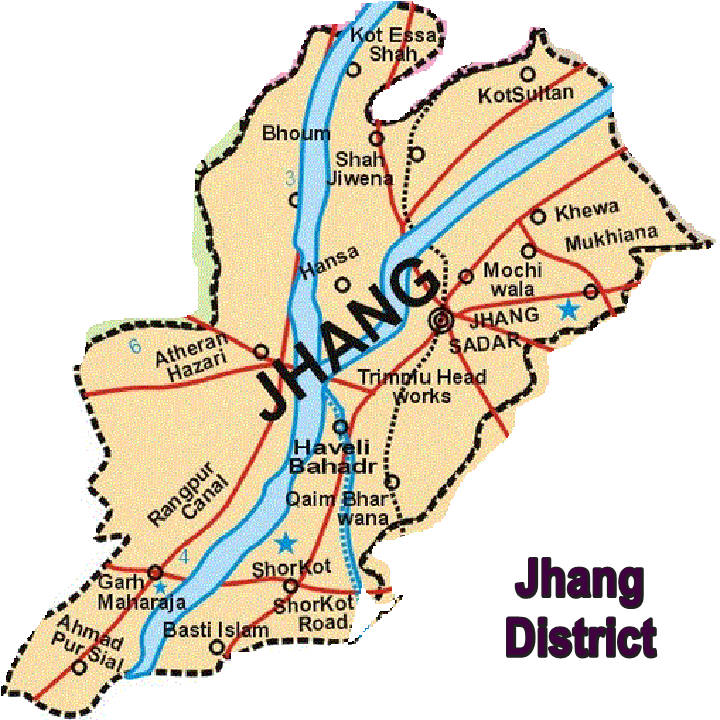
Jhang is located in central Punjab between the rivers Chenab and Jhelum. The district extends westward toward the Thal Desert and is surrounded by the districts of Sargodha, Chiniot, Faisalabad, Toba Tek Singh, Khanewal, Layyah, Bhakkar, Khushab and Muzaffargarh.
The official district administration describes Jhang as having three main geographical environments: the semi-desert landscape of the Thal west of the Jhelum and Chenab, the fertile riverine areas and the plains associated with the two rivers.
A Brief History of Jhang
Jhang has a long and complex history. The official district history records ancient settlements in the region and discusses its connections with several early civilizations and kingdoms. The area around the rivers was subject to repeated flooding in ancient times, while the higher Bar areas provided more suitable places for settlement and agriculture.
The district administration also records the ancient history of Shorkot and traditions connecting the region with the campaigns of Alexander the Great. The official account describes Alexander's army moving through the area during the fourth century BC, although individual details of these ancient campaigns should be treated as historical traditions rather than as evidence for every specific local association.
The medieval history of Jhang became closely connected with the Sial tribe. According to the district's historical account, the Sials established their power in the region after defeating the Nauls in approximately the fifteenth century. The Sials subsequently became one of the dominant political families of Jhang for several centuries.
Jhang eventually came under Sikh rule during the nineteenth century and was subsequently incorporated into British India after the Sikh defeat. The British established Jhang District in 1849 and developed administrative, irrigation and transportation infrastructure in the region.
During British rule, Jhang and Maghiana, two settlements situated close to one another, developed as a combined municipality known as Jhang-Maghiana. The municipality was established in 1867. Maghiana occupied higher ground overlooking the Chenab valley, while the older Jhang settlement lay closer to the river.
Jhang and the Legend of Heer and Ranjha
No introduction to Jhang would be complete without Heer and Ranjha. The tragic love story is one of the most famous romances of Punjabi literature and has been retold for centuries through poetry, music, theatre and film.
The story is particularly associated with the great Punjabi poet Waris Shah, whose eighteenth-century poetic version of Heer is considered one of the masterpieces of Punjabi literature.
According to the traditional story, Ranjha, whose name was Dheedo Ranjha, came to the Jhang region and fell in love with Heer, the daughter of a local family. Their love was opposed by their families and society, eventually leading to tragedy.
The tomb traditionally associated with Heer and Ranjha has become one of Jhang's best-known cultural landmarks. For visitors, the site is not simply a monument but a place representing the continuing importance of Punjabi folklore and romantic poetry.

Sultan Bahu and the Sufi Heritage of Jhang
Jhang has an exceptionally important place in the Sufi heritage of Punjab. The district is associated with several saints and shrines, the most famous being Hazrat Sultan Bahu.
Sultan Bahu was a seventeenth-century Sufi saint and Punjabi poet whose writings remain influential throughout South Asia. His shrine is located at Garh Maharaja, in the Jhang District.
The shrine attracts pilgrims throughout the year, particularly devotees interested in the spiritual teachings and poetry of Sultan Bahu.

Shah Jewna
Another important spiritual destination in Jhang District is Shah Jewna, associated with the shrine of Hazrat Shah Jewna. The shrine and surrounding settlement represent the strong Sufi traditions that have shaped the cultural identity of central Punjab.
The district government lists the shrines of revered personalities among the major tourism resources of Jhang.

Trimmu – Where the Jhelum and Chenab Meet
One of the most interesting natural attractions near Jhang is Trimmu, where the Jhelum River joins the Chenab River.
The confluence is an important geographical feature and one of the most scenic places in the Jhang region. The surrounding landscape combines riverine vegetation, agricultural land and semi-arid terrain.
The Trimmu Headworks was constructed in 1938–39 by British engineers as part of the Haveli irrigation project. It is located approximately 25 kilometres from Jhang Sadar and controls water for several canals. The official district administration describes Trimmu as a popular picnic and recreational destination, with boating and fishing opportunities.

Rivaz Bridge
The historic Rivaz Bridge, locally known as Chund Pull, crosses the Chenab River near Chund Bharwana in Jhang District.
The bridge was constructed by British engineers in the early twentieth century and is approximately 750 metres long. It is one of the historic bridges associated with the railway and transportation development of Punjab during the British period.

Shorkot and the Ancient History of Jhang
Shorkot, in the southern part of Jhang District, is another important destination for travelers interested in ancient Punjab. Archaeological remains in and around Shorkot have attracted historical interest for many years.
The Jhang district administration identifies the mound of Shorkot among the area's important tourism resources. Historical traditions also associate the region with Alexander's campaigns in Punjab, although archaeological interpretation of individual sites requires care.
A visit to Shorkot can therefore add an archaeological dimension to a Jhang itinerary that otherwise focuses on folklore, Sufi shrines and river landscapes.

Jhang's Rivers and Landscape
The identity of Jhang is inseparable from its rivers. The Chenab and Jhelum have shaped the agriculture, settlement patterns and history of the district for centuries.
The riverine areas are particularly attractive during the cooler months when the countryside is green and agricultural activity is at its height. To the west, the landscape gradually changes toward the semi-desert environment of the Thal.
This combination of fertile river valleys and desert-edge landscapes makes Jhang different from many other cities of Punjab.
Jhang Culture and Local Life
Jhang is part of the traditional cultural heartland of Punjab. Punjabi is widely spoken and village life remains closely connected with agriculture, livestock and the rivers.
The district has a strong tradition of hospitality and Sufi culture. Shrines, annual gatherings, folk music and Punjabi poetry continue to play an important role in local cultural life.
For international visitors, Jhang offers an opportunity to experience a less commercialized side of Punjab where folklore, spirituality, agriculture and river landscapes remain closely connected.
How to Travel to Jhang from Lahore
Jhang is approximately 300–330 kilometres from Lahore by road, depending on the route. The journey generally takes around 4.5 to 5.5 hours.
A common approach is via Faisalabad and Chiniot, although the most suitable route depends on current road conditions and the exact starting point in Lahore.
Private transportation is recommended for tourists because it allows visits to attractions outside Jhang city, including Trimmu, Heer and Ranjha's tomb, Shorkot and surrounding shrines.
How to Travel to Jhang from Islamabad
Jhang is approximately 300–350 kilometres from Islamabad by road, depending on the selected route. The journey usually takes around 5 to 6 hours.
Travelers can approach Jhang through the Faisalabad/Chiniot side or through other connecting roads in central Punjab.
For a cultural tour, Jhang can be combined with Islamabad, Taxila, Faisalabad, Chiniot and Lahore.
Distances to Jhang
| Starting City | Approximate Road Distance | Approximate Travel Time |
|---|---|---|
| Lahore | 300–330 km | 4.5–5.5 hours |
| Islamabad | 300–350 km | 5–6 hours |
| Karachi | Approximately 1,050–1,150 km | 16–19 hours |
| Faisalabad | Approximately 80–100 km | 1.5–2 hours |
| Chiniot | Approximately 50–60 km | 1–1.5 hours |
| Multan | Approximately 180–200 km | 3–3.5 hours |
Distances and travel times are approximate and can vary according to the route, traffic, road conditions and exact departure and arrival points.
Major Hotels in Jhang
Jhang has a smaller hotel market than Lahore, Faisalabad or Islamabad. Most visitors to the district are domestic travelers, business visitors or pilgrims visiting the area's shrines.
Accommodation is available through local hotels and guesthouses in Jhang and surrounding towns. Travelers undertaking a multi-day cultural tour should confirm hotel availability in advance, particularly if visiting during major religious gatherings or local events.
For international visitors, Travel & Culture Services can recommend and arrange suitable accommodation according to the itinerary, budget and preferred standard.
How to Explore Jhang in One Day
Jhang can be visited as a long day excursion, although travelers interested in the surrounding shrines and Trimmu should ideally spend one night in the region.
Morning – Jhang City and Heer Ranjha
Begin with a visit to the city and the cultural sites associated with Heer and Ranjha. Explore the traditional urban areas before continuing to the tomb traditionally associated with the legendary lovers.
Late Morning – Local Culture
Spend some time exploring the local markets and experiencing the traditional atmosphere of Jhang. Depending on the itinerary, visit a local shrine or historic site.
Lunch – Punjabi Cuisine
Enjoy a traditional Punjabi lunch before leaving the city for the river region.
Afternoon – Trimmu Headworks
Drive toward Trimmu Headworks, approximately 25 kilometres from Jhang Sadar. Enjoy the river landscape and, where available and appropriate, boating or fishing activities.
Evening – Return to Jhang
Return to Jhang in the evening or continue onward toward Faisalabad, Chiniot or another destination depending on your wider itinerary.
Two-Day Jhang Cultural Tour
| Day | Suggested Program |
|---|---|
| Day 1 | Arrive in Jhang, city sightseeing, Heer and Ranjha's tomb, local markets and cultural sites. |
| Day 2 | Trimmu Headworks, Jhelum-Chenab river landscape, Rivaz Bridge and selected Sufi shrines. |
The itinerary can be expanded to include Sultan Bahu at Garh Maharaja, Shah Jewna and Shorkot.
Jhang, Chiniot and Faisalabad Tour
Jhang is particularly easy to combine with Chiniot and Faisalabad. Chiniot is famous for its historic architecture, Shahi Mosque and extraordinary wood-carving traditions, while Faisalabad is one of Punjab's major industrial and commercial cities.
A possible cultural route is:
Lahore – Faisalabad – Chiniot – Jhang – Trimmu – Lahore
Travelers with more time can extend the journey toward Multan and southern Punjab.
Best Time to Visit Jhang
The best period for sightseeing in Jhang is generally from October to March, when temperatures are more comfortable for outdoor sightseeing.
The summer months can be very hot, especially around the river and semi-desert areas. Travelers visiting Trimmu or other outdoor attractions should plan activities for the morning or late afternoon during hotter periods.
Travel Tips for Jhang
- Carry drinking water during excursions outside the city.
- Wear comfortable clothing for shrine and outdoor visits.
- Dress respectfully when visiting religious sites.
- Ask permission before photographing people at shrines and villages.
- Use private transportation if you want to visit Trimmu and remote attractions.
- Check local conditions before visiting river areas.
- Allow extra time for rural roads and local sightseeing.
Jhang as Part of a Punjab Heritage Tour
Jhang is an excellent addition to a wider Punjab cultural itinerary. Its combination of Punjabi folklore, Sufi heritage, ancient history and river landscapes makes it quite different from the Mughal monuments of Lahore or the colonial architecture of Rawalpindi.
A carefully designed journey can connect Lahore, Faisalabad, Chiniot, Jhang, Multan and Bahawalpur, creating a fascinating route through the cultural heart of Punjab.
For travelers interested in literature and folklore, Jhang provides an opportunity to explore the landscape behind one of Punjab's most famous love stories. For spiritual travelers, the shrines of Sultan Bahu and Shah Jewna provide an entirely different dimension.
Tour and Travel Arrangements in Jhang
Travel & Culture Services can arrange private tours, transportation, hotels, local guides and customized cultural journeys in Jhang and throughout Punjab.
We can arrange visits to Heer and Ranjha's tomb, Trimmu Headworks, the Jhelum-Chenab confluence, Sultan Bahu, Shah Jewna, Shorkot and other historical and cultural attractions.
Jhang can also be incorporated into longer Pakistan itineraries covering Lahore, Faisalabad, Chiniot, Multan, Bahawalpur, Islamabad and other destinations.
For any help or arrangement for tours in Jhang, Punjab or anywhere in Pakistan, please contact Travel & Culture Services.
Frequently Asked Questions About Jhang
What is Jhang famous for?
Jhang is famous for the legendary story of Heer and Ranjha, the shrine of Sultan Bahu, Sufi traditions, the Chenab and Jhelum rivers, Trimmu Headworks and the ancient history of the surrounding region.
Is Jhang worth visiting?
Yes. Jhang is particularly worthwhile for travelers interested in Punjabi culture, folklore, Sufi heritage, river landscapes and lesser-known historical sites.
What is Jhang famous for historically?
Jhang has a long history involving ancient settlements, the Sial rulers, Sikh rule and British administration. The district also contains the ancient archaeological landscape around Shorkot and important British-era infrastructure such as Rivaz Bridge and Trimmu Headworks.
Where is Heer and Ranjha's tomb?
The tomb traditionally associated with Heer and Ranjha is located in Jhang District and is one of the area's best-known cultural landmarks.
Who was Sultan Bahu?
Sultan Bahu was a seventeenth-century Sufi saint and Punjabi poet whose shrine is located at Garh Maharaja in Jhang District. His poetry and spiritual teachings remain influential throughout South Asia.
Where do the Jhelum and Chenab rivers meet?
The Jhelum joins the Chenab at Trimmu in Jhang District. Trimmu Headworks is located near the confluence and is a popular local recreational destination.
How far is Trimmu from Jhang?
Trimmu Headworks is approximately 25 kilometres from Jhang Sadar according to the Jhang District Government.
How far is Jhang from Lahore?
Jhang is approximately 300 to 330 kilometres from Lahore by road, depending on the route, and the journey normally takes around 4.5 to 5.5 hours.
How far is Jhang from Islamabad?
Jhang is approximately 300 to 350 kilometres from Islamabad by road, depending on the route. The journey generally takes around five to six hours.
Can Jhang be visited as a day trip?
Yes, although a day trip from Lahore can be long. A full day can cover Jhang city, Heer and Ranjha's tomb and Trimmu. Travelers interested in Sultan Bahu, Shah Jewna and Shorkot should allow additional time.
Can Travel & Culture arrange a Jhang tour?
Yes. Travel & Culture Services can arrange transportation, accommodation, guides and customized tours to Jhang and other destinations throughout Punjab and Pakistan.



Advertisement
Advertise on this site click for advertising rates