
Tomb of Mir Chakar Khan Rind – The Baloch Hero Resting in Satghara
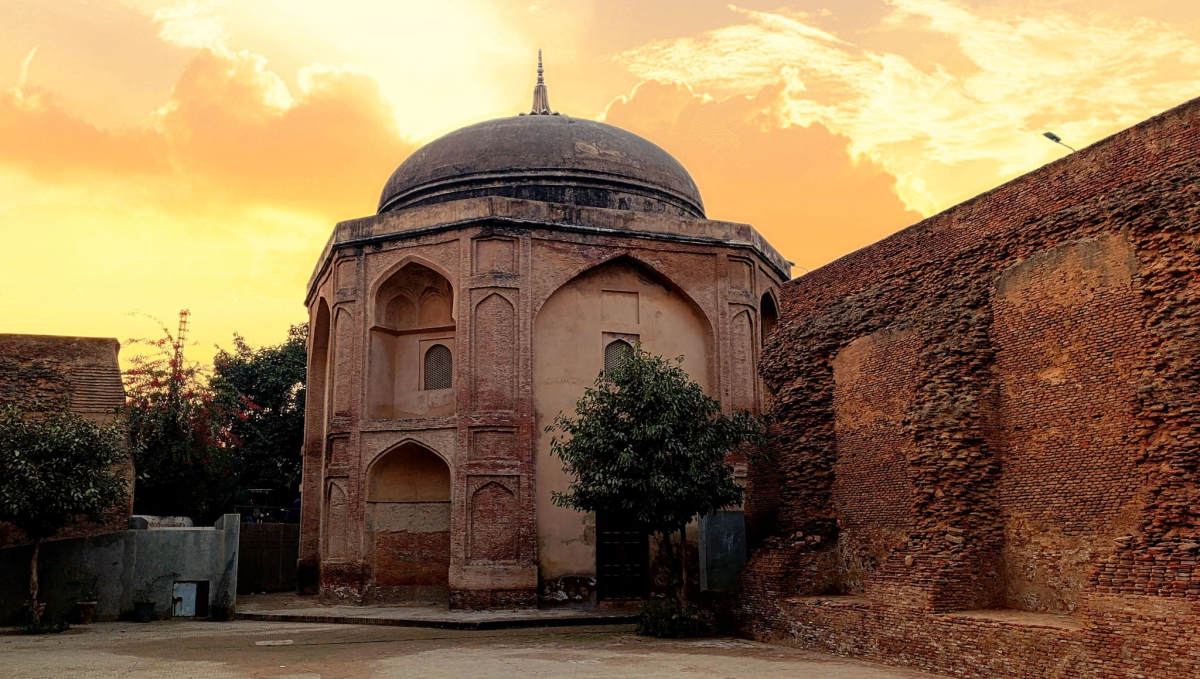
About 24 kilometers from Okara, near the banks of the Ravi River, stands an impressive octagonal tomb rising from the plains of Satghara village. This is the resting place of Mir Chakar Khan Rind (1468–1565), famously known as Chakar-e-Azam, the legendary chief of the Rind tribe and one of the greatest heroes in Baloch history.
The Warrior and His Migration
Mir Chakar Khan Rind became chief of the Rind tribe at the young age of eighteen after the death of his father, Mir Shahak Khan. His life was marked by the famous thirty-year Rind-Lashari conflict in Balochistan. After decades of warfare, he reconciled with Mir Goharam Lashari and left his homeland around 1519, migrating with thousands of loyal followers toward Central Punjab.
Upon reaching the fertile lands near the Ravi River, he established a new settlement at Satghara and constructed a strong fort with walls reportedly rising up to twenty-five feet. Here he rebuilt his power, earned respect, and lived his later years in relative peace.
Alliance with the Mughals
Historical sources such as Tabaqat-i-Akbari and Tarikh-i-Firishta record that Sher Shah Suri sought Mir Chakar’s support, which he declined. Later, when the Mughal Emperor Humayun returned from Persia to reclaim his throne, Mir Chakar’s son, Mir Shahdad, reportedly led thousands of Baloch warriors in support of the Mughals. After the victory of Delhi, Humayun granted extensive lands, including Satghara, along with honors and rewards to Mir Chakar and his family.
Mir Chakar Khan Rind passed away in 1565 at the age of approximately ninety-seven and was laid to rest in Satghara.
The Octagonal Tomb
Following his death, his loyal companions constructed a grand octagonal mausoleum using baked bricks and lime plaster. The structure reflects early Mughal architectural influence, with arched entrances and a prominent dome rising above the central chamber.
- Octagonal design.
- Brick masonry with lime plaster finish.
- Mughal-style arches and dome.
- Seven graves inside the chamber.
The central grave is attributed to Mir Chakar Khan Rind. Some local traditions also associate one of the graves with Bibi Hani, a legendary figure connected to the famous Baloch folklore of Hani and Shah Mureed.
Although the structure suffered damage during different historical periods — including the Sikh era in the 19th century — restoration work in recent years has helped preserve its dignity. At night, when illuminated, the dome glows beautifully against the sky.
Cultural Significance
The tomb is not merely a burial site; it symbolizes migration, resilience, and the shared heritage of Baloch and Punjabi cultures. Many Baloch families in Punjab trace their roots back to Mir Chakar’s migration. Even today, tribal elders and political leaders visit the site to pay respects.
Satghara itself is sometimes interpreted as meaning “Seven Houses,” though its exact origin remains debated. What remains certain is that this land became a second homeland for a great Baloch leader whose sword once shaped the destiny of Balochistan and whose final resting place lies peacefully in Punjab’s soil.
How to Visit
The Tomb of Mir Chakar Khan Rind is located approximately 24 km from Okara and about 110–120 km from Lahore. The journey from Lahore takes around 2.5 to 3 hours by road via the National Highway (N-5). Private transport is recommended for a comfortable visit.
Visitors interested in exploring the heritage of Okara and the Ravi region can include Satghara as part of a customized cultural tour.
The tomb stands today as a proud reminder of courage, migration, and unity — where the legacy of a Baloch warrior rests beneath the Punjabi sky.

Advertisement
Advertise on this site click for advertising rates