Balochistan or Baluchistan
Note : Quetta and rest of
Balouchistan requires NOC (No Objection Certificate) to visit we will be happy
to arrange it if you take a tour of Balouchistan thru us more details of
NOC for Balouchistan
Literally means the land of Balouchs, Balochistan is the area wise largest province of
Pakistan, it constitutes approximately 44% of the total area of Pakistan.
According to government figures 2009 estimates, Balochistan has a population of
roughly 10 million. Its bordered with Iran in the west, Afghanistan and the
North West Frontier Province to the north, Punjab and Sindh in the east. South
of Balochistan is bordered by the Arabian Sea.
The principal languages in the
province are the native Balochi and Brahui, followed by Pashto, Sindhi, Hazaragi,
and Persian. Quetta is the capital and the
largest city of Balouchistan, which is a
multi-ethnic, multilingual city. Balochistan is rich in natural
resources. It is the main source of natural gas in Pakistan.
Balouchistan Tours : 3 Days Quetta Ziarat Tour, 7 Days Balouchistan Tour, 10
Days Balouchistan Tour, 10 Days Sindh & Balouchistan Tour, 21 Days Complete
Pakistan Tour
Major Cities
Quetta:- The capital city
of the province
Gwadar:- Port city in the south
Ziarat :- The land of
Junipars the longest living plans on earth.
Turbat:- The historical city of Kech Makran
the fort of Punhoon (Pannu)
Kalat:- The former kingdom where the Khan of
Kalat had a fort, been host to many explorers and traders in the past.
Hinglaj:- The sacred place of Hindus and
the shrine of Aadh Shakti Devi Maata
Princess of Hope
Kharan:-
Hub:- Town bordering with
Karachi
Chaman: Northwestern border town bordered with Afghanistan
Pishin: A green rich agriculture town in Northern hills
Sibi: The city at the famous Bolan pass
Zhob: Northern city
Dal Bandain:
Taftan:- Border town bordering with iran
Jewni :- Extreme South Eastern beach village
Story of Kharan, Lasbela and Makran's accession to Pakistan
Sutkagen Dor
Sokhta Koh First Indus
valley civilization city found in India
Baluchistan is the area wise largest province of Pakistan. It’s bordered with
Iran in the west, Afghanistan and the North West Frontier Province to the north,
Punjab and Sindh in the east, South of Baluchistan is bordered by the Arabian
Sea.
Pashto and Balochi are major languages in Balochistan. Brahui is third more
popular language. There is Hazara population in the provincial capital and they
speak Farsi and Hazargi.
Wheat, jowar (sorghum), and rice are the major food crops, and fruits are the
principal cash crops. Sheep rising employs the great majority of the population
and occupies most of the land. The sheep provide a high-quality wool, part of
which is exported. It includes cotton and woolen manufacturing, food processing,
carpet making, textile and leather embroidery, small machinery and appliance
manufacturing and handicrafts.
Wheat, millet and rice are part of the Baloch meal. Meat is also an important
part; “Sajji” is the favorite dish of most people. Sajji is the food eaten with
knife other than that Balochi people usually eat with hands. Milk, butter and
vegetables are part of Balochi cuisine.
Baluchistan contains a wide variety of minerals (such as water reservoirs or
forests) are limited in this province. Aside from coal, natural gas, gold,
copper, uranium, iron and various other well-known minerals, it also contains
deposits of lead, zinc, chromite, gypsum, and limestone amongst others.
Gwadar port has great strategic value, enhancing Pakistan’s importance in the
whole region. The port holds great strategic and economic significance for
Pakistan. It is third important deep sea port of Pakistan after Karachi and
Qasim Ports. It is located at cross junction of international sea shipping and
oil trade routes. Gwadar can act as an international trade hub for Pakistan.
Though Baluchistan is an area of barren lands, deserts and mountains, the Baloch
culture is full of traditions, arts and crafts. Balochi embroidery is one of the
most popular arts and crafts which are done by the females. Baluchistan is also
known for its tribes and festivals. Another distinct feature of Baloch culture
is the storytelling tradition. Poets and story tellers are highly respected in
Balochi culture. Many social festivals which has folk music performance, culture
dances, handicrafts stalls, cattle shows and a number of other entertaining
activities showing the colorful side of Balochi people.
In the Diorama, an attempt has been made to reflect the glimpses houses,
traditional dresses, mountains, husbandry, Karez (underground water channels)
etc. of Baluc^jMnn in the scene A couple is sitting in the open courtyard of
their hut-house, wearing traditional clothes. In the background, can be seen the
landscape that depicts hilly regions, field patches, pastures and a karez.
Geography of Balochistan
Balochistan is located at the south-eastern edge of the Iranian
plateau. It strategically bridges the Middle East and Southwest Asia to Central
Asia and South Asia, and forms the closest oceanic frontage for the land-locked
countries of Central Asia.
Total area of Balochistan is 347,190 km (134,051 square
miles), which is approximately 44% of the total land area of Pakistan. The
population density here is very low due to the mountainous terrain and scarcity
of water. The southern region is known as Makran. The central region is known as
Kalat.
The Sulaimanki range Mountains dominate the northeast corner and
the Bolan Pass is a natural route into Afghanistan towards Kandahar, used as a
passageway during the British campaigns to Afghanistan. Much of the province
south of the Quetta region is sparse desert terrain with pockets of towns mostly
near rivers and streams.
The capital city is Quetta, located in the most densely
populated district in the northeast of the province. Quetta is situated in a
river valley near the border with Afghanistan, with a road to Kandahar in the
northwest.
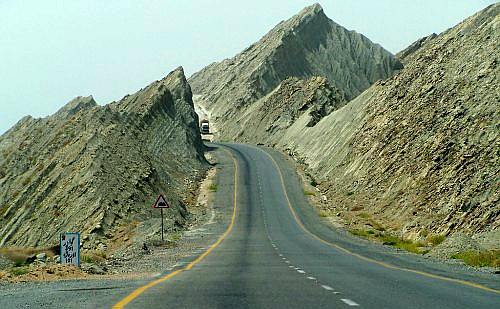
At Gwadar on the coast of the Arabian Sea/Indian Ocean, the
Pakistani government is currently undertaking a large project with Chinese help
to build a large port.
Balochistan Climate
Very cold winters and hot summers characterize the climate of
the upper highlands. Winters of the lower highlands vary from extremely cold in
the northern districts to mild conditions closer to the Makran coast. Summers
are hot and dry, especially the arid zones of Chaghai and Kharan districts. The
plain areas are also very hot in summer with temperatures rising as high as 120
?F (50 ?C). Winters are mild on the plains with the temperature never falling
below the freezing point. The desert climate is characterised by hot and very
arid conditions. Occasionally strong windstorms make these areas very
inhospitable.
Getting to Balochitan (Travel)
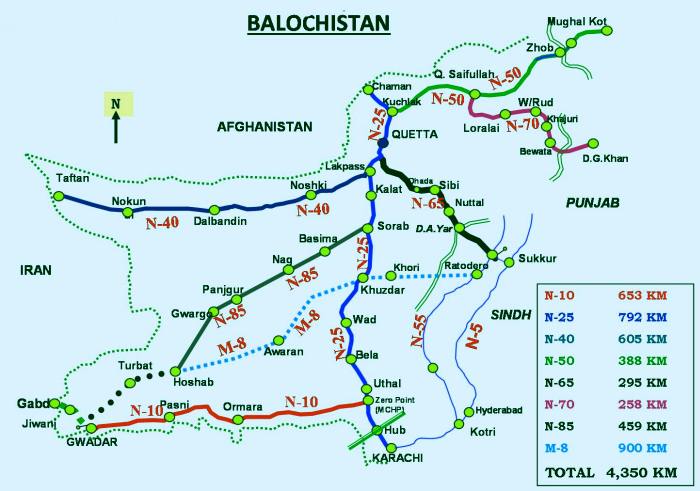
Balochistan is connected with Iran in the web at Taftan border
which is open to passenger and goods trafic. In the north west it is connected
with Afghanistan by Chaman border and in the south it is connected with Karachi
via RCD highway. There are also good connections to Pakhtunkhwah from
Baluchistan via Zhob and to Sindh via Bolan pass.
One of the most easiest and scenic way to reach Quetta capital
of Balochistan is from Sukkur via Bolan pass the terain is very scenic and
spectacular.
Hotel & Facilities
Quetta being the capital of the city has a 5 stat hotel The
Serena Quetta and also few
other 3 star hotels like
lourds hotel. In the southern most port city of Gawadar there is the Pearl
Continental hotel Gwadar and other smaller hotels. Rest of Balochistan there are
few guest houses and 2 PTDC Motels in Taftan & Khuzdar.
Population
Balochistan has a population of around 10 million inhabitants,
which makes up approximately 5% of the Pakistani population. Overall, the Baloch
and Brohi population is about 47% whilst the Pashtuns are 46% of the province's
population. The rest are mainly Hazaras , Sindhis and Punjabi.
Balochi speaking people are concentrated in the sparsely populated north-west,
west, east and south; Brohui speaking in the centre of the province, while the
Pashtuns are the majority in the north.The Vaghiri in north Kalat and Mastung
area speak a variant of Sindhi. Similarly the Lassi of Lasbela speak another
variant of Sindhi/Seraiki named after their tribe. Quetta, the capital of the
province, is largely populated with Pashtuns , with Hazara and Punjabi
minorities. A large number of Balochs moved in Quetta after it became the
capital of Balochistan in 1970. Near the Kalat region and other parts of the
province there are significant numbers of Baloch Brahui speakers. Along the
coast various Makrani Balochi speaking predominate. In addition, Afghan refugees
can be found in the province including Pashtuns and Tajiks. Khuzdar now has a
large number of Hazaras. Many Sindhi farmers have also moved to the more arable
lands in the east. There are also a growing number of other ethnic groups
consisting of Kurdish, Panjabi, Mohajir and Iranians who have made Balochistan
their home in recent decades.
Copper Deposits
One of the world's largest copper deposits (and its
matrix-associated residual gold) have been found at Reko Diq in the Chagai
District of Balochistan. Reko Diq is a giant mining project in Chaghi. The main
license (EL5) is held jointly by the Government of Balochistan (25%),
Antofagasta Minerals (37.5%) and Barrick Gold (37.5%). The deposits at Reko Diq
are hoped to be even bigger than those of Sarcheshmeh in Iran and Escondida in
Chile (presently, the second and the third largest proven deposits of copper in
the world).
BHP Billiton, the world's largest copper mining company, began
the project in cooperation with the Australian firm Tethyan, entering into a
joint venture with the Balochistan government. The potential annual copper
production has been estimated to be 900,000 to 2.2 million tons.. The deposits seem to be largely of porphyry rock nature
Society
Balochistan culture is primarily tribal, deeply patriarchal and conservative.
Baloch society is dominated by tribal chieftains called "Sardars", who are the
ruling elite of Balochistan and have been criticized for blocking the
educational development and empowerment of the Baloch people[weasel words], lest the their status quo be challenged.
'Honour killings' are common place but completely discouraged by
majorities. In one recent incident in August 2008, the Asian Human Rights
Commission reported that five women (including three teenagers) in a remote
village had been beaten, shot and buried alive in a ditch for the crime of
seeking to choose their own husbands. One of the tribesmen involved was the
younger brother of a provincial minister from the ruling Pakistan People's
Party, and local police therefore refused to take any action.
After human rights activists brought the case to national and
international attention, Israr Ullah Zehri, who represents Balochistan in the
Pakistani Parliament, defended the killings and asked his fellow legislators not
to make a fuss about the incident. He told Parliament, "These are centuries-old
traditions, and I will continue to defend them. Only those who indulge in
immoral acts should be afraid." But many Baloch literate are against the
horrific crimes which took place in Balochistan. According to majority of
Baloch, the person or tribe head should be brought to the court and must be
punished. Many Baloch or Balochis have denied the fact that Karo Kari is part of
Balochi culture. They claim it was a nomad cultural thing which has been stopped
for many years, but because of the poor administration of Pakistani government
and to demilitarize the Baloch awareness such act are taken place.
Balochistan Road Map
Travel & Culture Services Pakistan
220A Panorama center Fatima Jinnah Road Karachi
Email : Click Here To contact
us.
| Home | Pakistan Tours | MICE Conferences & Incentives |
Hotels | Airfares | Islamabad | Karachi | Lahore | Peshawar | Quetta |
| Sibi |
Faisalabad | Multan | Hyderabad |
Sukkur | Hunza | Gilgit |
Baltistan | Chitral | Swat | Karakorum Highway |
History of Pakistan
| Archeology | Weather
| Security | Contact
Information |


Advertise on this site click for advertising rates
