

Jaranwala Pakistan Travel Guide – History, Culture, Pakistani Gate and Gangapur
Jaranwala is a historic agricultural city in Faisalabad District of Punjab, Pakistan. It is the headquarters of Jaranwala Tehsil and lies in the fertile plains of central Punjab. The city developed during the British period as part of the great agricultural transformation created by the Punjab canal-colony system.
Today Jaranwala is primarily a commercial and agricultural centre, but it has a surprisingly interesting heritage for travelers who want to explore Punjab beyond Lahore and the better-known tourist destinations. Its historic Pakistani Gate, clock tower, old bazaars, agricultural markets and colonial-era town plan provide an insight into the development of Punjab during the late nineteenth and early twentieth centuries.
Jaranwala is also closely associated with Sir Ganga Ram, one of the great engineers and philanthropists of colonial Punjab. Nearby Gangapur is associated with the remarkable horse-drawn tram that he established in 1898. This unusual piece of railway history makes the Jaranwala area particularly interesting for cultural and heritage travelers.
Jaranwala is a city and tehsil headquarters in Faisalabad District. According to the Municipal Committee Jaranwala, the modern town was founded in 1908 and inaugurated in 1909 by Michael Ferrar, the Deputy Commissioner of Faisalabad. The city grew as part of the agricultural development of the Punjab canal colonies. :contentReference[oaicite:1]{index=1}
Where is Jaranwala?
Jaranwala is located in central Punjab, within Faisalabad District. It is surrounded by fertile agricultural land and a network of canals and distributaries that reflect the transformation of the Sandal Bar region during the British period.
The city is well connected by road with Faisalabad, Lahore, Sheikhupura, Nankana Sahib and other towns of central Punjab. Its location makes it suitable for travelers who want to combine rural Punjab with a visit to Faisalabad.
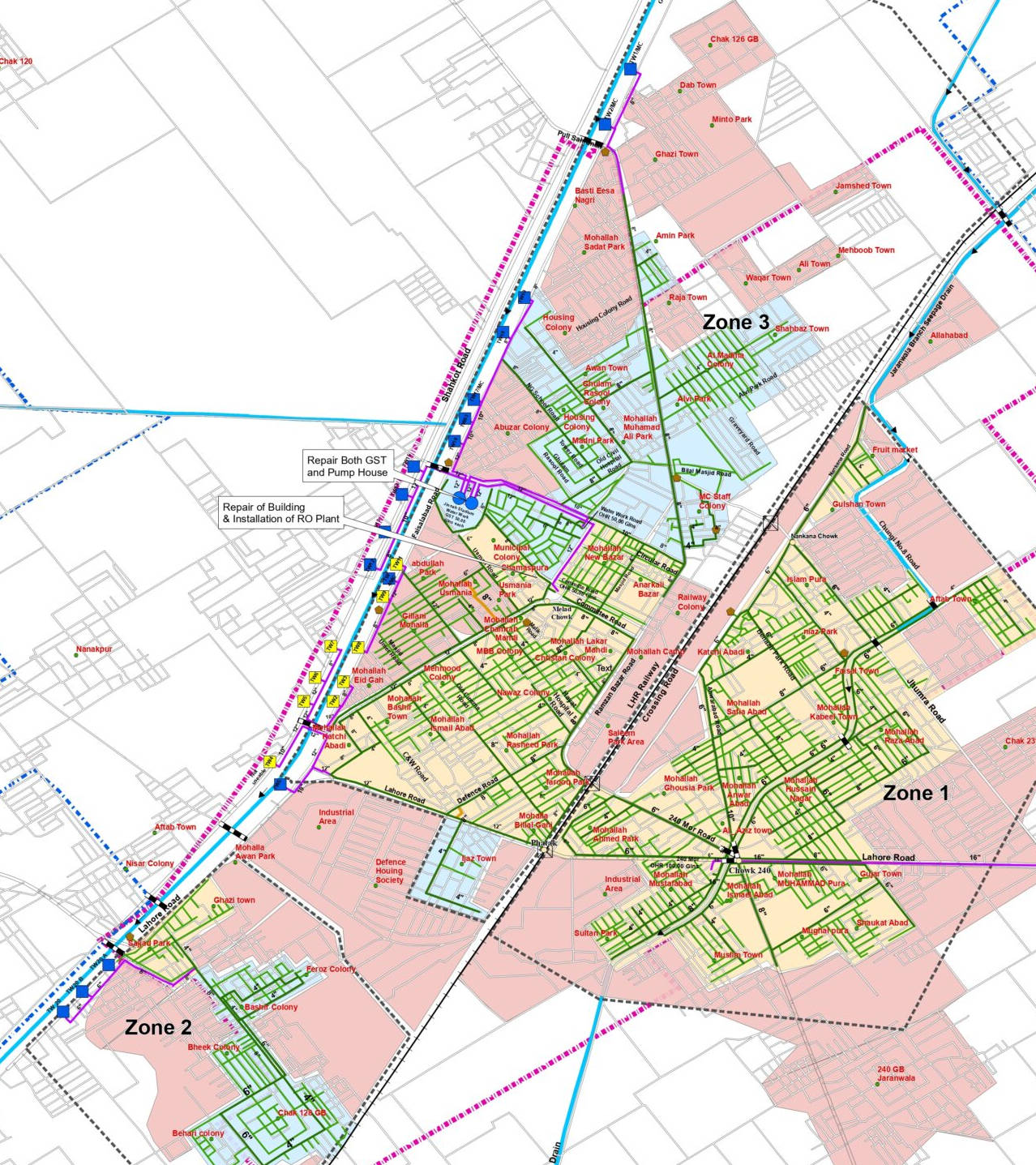
A Brief History of Jaranwala
The wider Jaranwala area has a history extending much further back than the modern town. Local historical tradition connects the name with an old tree whose hanging roots became a recognizable feature of the landscape. The Municipal Committee explains the name through the Punjabi words jaraan, meaning roots, and wala, referring to a place associated with them. :contentReference[oaicite:2]{index=2}
The region was historically part of the Sandal Bar, a large tract of Punjab that was transformed dramatically during the British period.
The construction of canals brought water to previously dry areas and created new agricultural settlements. The Lower Chenab Canal system was part of this wider transformation. The Punjab canal colonies turned large areas of western Punjab into highly productive agricultural regions and led to the establishment of numerous numbered villages known as Chaks.
Jaranwala emerged as one of the planned market towns associated with this development. The Municipal Committee states that the existing city was founded by the British government in 1908 and inaugurated in 1909 by Michael Ferrar, Deputy Commissioner of Faisalabad. :contentReference[oaicite:3]{index=3}
Historical research into the canal colonies also records Jaranwala's development as part of the market-town network created during the expansion of the colony. :contentReference[oaicite:4]{index=4}

Jaranwala and the Punjab Canal Colonies
The history of Jaranwala cannot be separated from the remarkable agricultural revolution that took place in Punjab under British rule.
Beginning in the late nineteenth century, large irrigation projects brought canal water to extensive areas of the Punjab. New settlements were established, agricultural land was distributed and market towns developed to serve the new farming communities.
Jaranwala was one of these important market centres. The railway and road connections helped agricultural products move from the countryside to larger markets.
The canal colonies fundamentally changed the landscape. Wheat, cotton, sugarcane and other commercial crops became increasingly important, and the region around Jaranwala remains strongly agricultural today.
For travelers interested in the history of irrigation and rural development, a journey through the countryside around Jaranwala can therefore be as interesting as sightseeing in the city itself.
Pakistani Gate Jaranwala
The Pakistani Gate is one of the most important historic landmarks in Jaranwala and should be the first stop on a city sightseeing tour.
The gate has itself passed through several chapters of the history of the subcontinent. It was originally constructed in 1917 and named O'Dwyer Gate after Sir Michael O'Dwyer, then Lieutenant Governor of Punjab.
Following the Jallianwala Bagh massacre in 1919, the gate was renamed Railway Gate. When Jawaharlal Nehru visited Jaranwala in 1936, it was subsequently renamed Nehru Gate. After the creation of Pakistan, it received its present name, Pakistani Gate. :contentReference[oaicite:5]{index=5}
The sequence of names makes the gate a fascinating physical reminder of the political changes experienced by Punjab during the first half of the twentieth century.

Jaranwala Clock Tower
The clock tower or Ghanta Ghar is another recognizable landmark in the city centre. It forms part of the historic urban landscape around the main commercial area.
The clock tower and surrounding bazaars provide a good starting point for walking through central Jaranwala. Visitors can see the relationship between the old market, roads, civic buildings and the railway-oriented development of the town.
Jaranwala Old Bazaar
The old bazaar is where visitors can experience the everyday commercial life of Jaranwala. The narrow streets and busy shops reflect the city's role as a market centre for the surrounding agricultural villages.
A morning visit is particularly interesting because farmers, traders and shopkeepers are active in the markets and transport areas.
For photographers, the bazaars provide opportunities to capture traditional Punjabi commerce, food, clothing, agricultural products and local architecture.

Sir Ganga Ram and Jaranwala
Jaranwala has an unusual connection with Sir Ganga Ram, the celebrated civil engineer, architect and philanthropist who played a major role in the development of Lahore and the agricultural infrastructure of Punjab.
Ganga Ram is associated with the planning of Jaranwala and with the remarkable transport system at nearby Gangapur.
His legacy can be seen across Punjab, but his association with Jaranwala provides an additional reason for heritage travelers to explore the area.
The Famous Horse-Drawn Train of Gangapur
One of the most unusual attractions associated with Jaranwala is the historic horse-drawn tram at Gangapur, a village in Jaranwala Tehsil.
The tram was built in 1898 and is associated with Sir Ganga Ram. Instead of being powered by a locomotive, the tram was pulled by horses along railway tracks. It was originally intended to transport machinery and materials.
The Gangapur horse-drawn railway is one of the most unusual surviving reminders of the experimental transport and engineering solutions used in colonial Punjab.
Visitors interested in industrial history, engineering, railway history or the legacy of Sir Ganga Ram should consider adding Gangapur to their Jaranwala itinerary.

Jaranwala Agricultural Markets
Agriculture remains at the heart of the economy of Jaranwala and the surrounding tehsil. The city's grain market serves a large agricultural hinterland.
Wheat, cotton, sugarcane and rice are among the important agricultural commodities associated with the wider region. The historic canal-colony system helped make this part of Punjab one of the major agricultural areas of the subcontinent.
A visit to the Ghalla Mandi can provide foreign visitors with an authentic glimpse into the relationship between Punjab's villages, farmers, traders and urban markets.

Jaranwala Parks
Jaranwala has a number of public parks and green spaces. These include Committee Bagh, Usmania Park, Benazir Park and other neighbourhood parks.
The city's municipal planning documents identify several parks and recreational areas within Jaranwala. :contentReference[oaicite:6]{index=6}
For visitors, these parks are less about conventional tourism and more about observing everyday life in a Punjab city.
Jaranwala and the Sandal Bar
Jaranwala lies within the historic landscape known as the Sandal Bar. The term Bar traditionally refers to the forested or semi-arid tracts of Punjab between the major rivers.
Before the large irrigation schemes, much of this region was considerably drier than it is today. The construction of canals transformed the landscape and made intensive agriculture possible.
The history of the Sandal Bar is also connected with Punjabi folklore and resistance to British rule. Rai Ahmad Khan Kharal, a celebrated figure of the 1857 uprising, is strongly associated with this region. The Municipal Committee Jaranwala also identifies him among the notable historical figures connected with the area. :contentReference[oaicite:7]{index=7}
Jaranwala and Bhagat Singh
The wider Jaranwala Tehsil is also associated with Bhagat Singh, one of the most famous revolutionaries of the Indian independence movement.
Historical accounts place his birthplace at Banga, in what is now Jaranwala Tehsil. His connection with the region adds another layer to the area's complicated history of colonialism, resistance and independence.
For travelers interested in the history of British India, the Jaranwala area therefore provides a fascinating opportunity to explore several different historical narratives within a relatively small geographical region.

How to Get to Jaranwala from Lahore
Jaranwala is approximately 120 to 130 kilometres by road from Lahore, depending on the route and starting point.
The journey by private car generally takes around 2½ to 3½ hours, depending on traffic and road conditions.
A practical route is through the Lahore–Sheikhupura–Faisalabad region, followed by the road toward Jaranwala. Travelers should allow additional time during busy periods.
How to Get to Jaranwala from Islamabad
Jaranwala is approximately 330 to 350 kilometres by road from Islamabad, depending on the selected route.
The easiest option for visitors is usually a private vehicle or a combination of motorway travel toward Faisalabad followed by the local road to Jaranwala.
Travelers coming from Islamabad can combine Jaranwala with Faisalabad, Nankana Sahib or Lahore as part of a wider Punjab itinerary.
How to Get to Jaranwala from Faisalabad
Faisalabad is the nearest major city and Jaranwala is approximately 35 to 40 kilometres away.
The short distance makes Jaranwala particularly suitable as a day excursion from Faisalabad.
A combined Faisalabad–Jaranwala tour is an excellent way to compare the industrial character of Faisalabad with the agricultural and canal-colony heritage of Jaranwala.
How to Get to Jaranwala from Karachi
Karachi is far from Jaranwala, and the journey is best incorporated into a longer Pakistan itinerary.
Travelers arriving in Pakistan through Karachi can fly to Lahore or Faisalabad and then continue by road. Overland travelers can travel north through Sindh and southern Punjab before continuing toward central Punjab.
For foreign visitors, flying to Lahore or Faisalabad is normally the more convenient option when Jaranwala is part of a Punjab tour.
Distance to Jaranwala from Major Cities
| Starting City | Approximate Road Distance | Approximate Travel Time |
|---|---|---|
| Lahore | About 120–130 km | About 2½–3½ hours |
| Islamabad | About 330–350 km | About 5–6 hours |
| Faisalabad | About 35–40 km | About 45–60 minutes |
| Sheikhupura | About 60–70 km | About 1½ hours |
| Nankana Sahib | About 55–65 km | About 1½ hours |
| Karachi | About 1,000 km+ | About 14–16+ hours by road |
Note: Distances and journey times are approximate. Actual road distances depend on the starting point, route and traffic conditions.
Hotels in Jaranwala
Jaranwala is primarily a local commercial and agricultural centre, so its accommodation options are more limited than those available in Lahore or Faisalabad.
For travelers requiring a wider selection of established hotels, Faisalabad is the best nearby base. Faisalabad has several established hotels and can be used as a base for day trips to Jaranwala.
Travel & Culture Services can arrange suitable accommodation according to the requirements and budget of travelers visiting Jaranwala.

How to Explore Jaranwala in One Day
Jaranwala can be explored comfortably in one day. However, if you want to include Gangapur and the horse-drawn tram, it is better to start early and confirm local arrangements in advance.
08:30 – Arrive in Jaranwala
Start your visit in the central part of the city and proceed toward the historic landmarks.
09:00 – Pakistani Gate
Begin at the historic Pakistani Gate and learn about its changing names and the political history of colonial Punjab.
10:00 – Clock Tower and Old Bazaar
Explore the clock tower and walk through the old commercial streets.
11:30 – Historic Buildings
Look at the older civic, commercial and railway-related buildings around the town centre.
12:30 – Ghalla Mandi
Visit the agricultural market and observe the trade in crops and other commodities.
13:30 – Lunch
Enjoy a traditional Punjabi lunch at a local restaurant.
14:30 – Gangapur Excursion
If arrangements have been confirmed, travel toward Gangapur to explore the historic horse-drawn railway associated with Sir Ganga Ram.
16:30 – Return to Jaranwala
Return to Jaranwala and visit one of the city's parks or continue exploring the bazaars.
18:00 – Depart
Continue to Faisalabad, Lahore or your next destination.
Suggested One-Day Jaranwala Itinerary
| Time | Activity |
|---|---|
| 08:30 | Arrival in Jaranwala |
| 09:00 | Pakistani Gate |
| 10:00 | Clock Tower and old bazaar |
| 11:30 | Historic town centre |
| 12:30 | Ghalla Mandi |
| 13:30 | Punjabi lunch |
| 14:30 | Gangapur and horse-drawn tram |
| 16:30 | Return to Jaranwala |
| 18:00 | Departure |
Jaranwala and Faisalabad Tour
Jaranwala is particularly suitable for inclusion in a Faisalabad cultural tour.
Faisalabad represents the industrial and textile economy of central Punjab, while Jaranwala provides a window into the agricultural and canal-colony landscape that surrounds the city.
A possible itinerary is:
- Day 1: Lahore city tour.
- Day 2: Lahore to Faisalabad, visiting Faisalabad's historic Clock Tower and bazaars.
- Day 3: Jaranwala and Gangapur, including Pakistani Gate and the horse-drawn tram.
- Day 4: Continue toward Nankana Sahib or return to Lahore.
Jaranwala for Heritage and Photography
Jaranwala is particularly rewarding for photographers and heritage travelers because the city combines several different visual landscapes.
The historic gate, clock tower, railway environment, old bazaars, agricultural markets, canal landscape and colorful Punjabi transport culture can all be incorporated into a photography itinerary.
The surrounding villages are especially interesting during harvest seasons, when agricultural activity is at its most visible.
Local Culture and Food
Punjabi is the principal language of everyday life in Jaranwala, while Urdu is widely understood. English is more common among educated residents and in formal settings.
The food culture is typical of central Punjab, with roti, naan, daal, vegetables, chicken and mutton curries, karahi, barbecue, rice dishes and lassi widely available.
Visitors should also explore local tea shops and traditional sweet shops, which are an important part of everyday Punjabi social life.
Best Time to Visit Jaranwala
The best time for sightseeing in Jaranwala is generally from October to March, when temperatures are more comfortable for walking around the old city and exploring the countryside.
Spring is also a pleasant period for photography and rural excursions.
Summer can be extremely hot in central Punjab, so visitors should schedule outdoor activities in the morning and late afternoon.
Travel Tips for Jaranwala
- Start sightseeing early during the warmer months.
- Wear comfortable shoes for exploring the old bazaar.
- Ask permission before photographing people, workshops or private property.
- Confirm arrangements before visiting Gangapur and the horse-drawn tram.
- Faisalabad provides a wider range of hotels than Jaranwala.
- Consider combining Jaranwala with Faisalabad or Nankana Sahib.
- Allow additional time for rural roads and agricultural areas.
- A local guide can greatly improve the historical interpretation of the city.
Why Visit Jaranwala?
Jaranwala is not a conventional resort destination. Its attraction lies in its history, agriculture, architecture, engineering heritage and living Punjabi culture.
The city tells an important story about the transformation of Punjab from a relatively dry landscape into one of South Asia's major agricultural regions.
The Pakistani Gate tells the story of colonial rule, nationalism and independence. The agricultural markets demonstrate the continuing importance of the canal colonies. And nearby Gangapur preserves an extraordinary connection with Sir Ganga Ram and the horse-drawn railway.
For travelers who want to see a different side of Punjab, Jaranwala is therefore an interesting and worthwhile destination.
Tour and Travel Arrangements for Jaranwala
Travel & Culture Services can arrange customized tours to Jaranwala, Faisalabad and other destinations throughout Punjab and Pakistan.
We can assist with private transportation, hotels, professional guides, airport transfers, sightseeing and customized cultural and historical itineraries.
Jaranwala can be incorporated into tours of Lahore, Faisalabad, Nankana Sahib, Sheikhupura and central Punjab.
For any help or arrangement for tours in Jaranwala or anywhere in Pakistan, please contact Travel & Culture Services.
Frequently Asked Questions About Jaranwala
Where is Jaranwala located?
Jaranwala is located in Faisalabad District of Punjab, Pakistan. It is an important agricultural and commercial centre of central Punjab.
What is the history of Jaranwala?
The wider area has an older history, but the modern planned town was founded by the British government in 1908 and inaugurated in 1909. It developed as part of the canal-colony agricultural development of Punjab. :contentReference[oaicite:8]{index=8}
Why is Jaranwala called Jaranwala?
According to the Municipal Committee Jaranwala, the name is associated with the hanging roots of an old tree. The Punjabi word jaraan refers to roots, while wala refers to a place associated with something. :contentReference[oaicite:9]{index=9}
What is Jaranwala famous for?
Jaranwala is famous for its agricultural markets, Pakistani Gate, clock tower, canal-colony heritage and its association with Sir Ganga Ram and Gangapur's historic horse-drawn railway.
What is Pakistani Gate?
Pakistani Gate is a historic landmark in central Jaranwala. It was originally known as O'Dwyer Gate, later Railway Gate and Nehru Gate, before receiving its present name after independence. :contentReference[oaicite:10]{index=10}
What is the Gangapur horse-drawn train?
It is a historic tram associated with Sir Ganga Ram. Built in 1898, it operated on railway tracks using horses and is one of the most unusual surviving transport relics associated with Punjab's colonial history.
How far is Jaranwala from Lahore?
Jaranwala is approximately 120–130 kilometres from Lahore by road, depending on the route.
How far is Jaranwala from Faisalabad?
Jaranwala is approximately 35–40 kilometres from Faisalabad, making it an easy day excursion from the city.
Can Jaranwala be visited in one day?
Yes. The historic centre, Pakistani Gate, clock tower, bazaars and agricultural markets can be visited in one day. More time should be allowed if Gangapur is included.
Can foreign tourists visit Jaranwala?
Jaranwala can be included in a cultural or historical tour of Punjab. Foreign visitors should check current travel and security guidance and preferably travel with an experienced local operator and guide.
Can Travel & Culture arrange a tour to Jaranwala?
Yes. Travel & Culture Services can arrange private transportation, accommodation, guides and customized cultural and historical tours to Jaranwala and throughout Pakistan.


Advertisement
Advertise on this site click for advertising rates