

Khanewal Pakistan Travel Guide – History, Railway Heritage and Places to Visit
Khanewal is an important city in southern Punjab and the administrative headquarters of Khanewal District. Situated on Pakistan's major railway network and connected by the National Highway, Khanewal has historically been an important transportation and agricultural center.
Unlike the great historic cities of Lahore and Multan, Khanewal is a comparatively modern town whose development was strongly influenced by railways, irrigation and agricultural colonization. The city is therefore an interesting destination for travelers who want to understand another side of Punjab's history.
The wider district is considerably more interesting for cultural travelers. It includes the ancient settlement of Tulamba, the historic town of Mian Channu, Kabirwala and the important Shrine of Khalid Walid.
Where is Khanewal?
Khanewal is located in Punjab, Pakistan, approximately between the major cities of Multan, Sahiwal, Vehari and Jhang.
The district is surrounded by Multan, Jhang, Sahiwal, Vehari, Toba Tek Singh and Muzaffargarh districts. The official district profile describes Khanewal as being situated on the Peshawar–Karachi main railway line and on the National Highway. :contentReference[oaicite:1]{index=1}
The district covers approximately 4,349 square kilometres and consists of four tehsils: Khanewal, Mian Channu, Kabirwala and Jahanian. :contentReference[oaicite:2]{index=2}
A Brief History of Khanewal
The history of Khanewal is closely connected with the settlement of southern Punjab and the development of irrigation and railways.
According to the Municipal Committee Khanewal, the present city was little more than a village before the early twentieth century. A railway colony was established in 1904, while the railway connection between Multan and Faisalabad helped transform the settlement into an important railway junction. :contentReference[oaicite:3]{index=3}
The railway brought workers, traders and new settlers to the area and encouraged the growth of the town. Khanewal subsequently became an Area Committee in 1919 and a Municipal Committee in 1933. :contentReference[oaicite:4]{index=4}
Khanewal was formerly part of Multan District. On 1 July 1985, Khanewal was established as a separate district with four tehsils: Khanewal, Kabirwala, Mian Channu and Jahanian. :contentReference[oaicite:5]{index=5}
Khanewal and the Railway
The railway is perhaps the most important feature in understanding the modern history of Khanewal.
The development of the railway transformed what had been a relatively small settlement into a significant transport center. Khanewal Junction became an important point on the railway network linking Punjab with Sindh and other parts of Pakistan.
The official District Khanewal website describes Khanewal Junction as a major railway station and a junction of the Khanewal–Wazirabad branch line. It is served by numerous long-distance railway routes. :contentReference[oaicite:6]{index=6}
For travelers interested in the history of transportation in Pakistan, the railway station and surrounding railway environment provide an interesting glimpse into the development of modern Punjab.

Khanewal as an Agricultural City
Khanewal is located in one of Punjab's important agricultural regions. The district's economy is strongly connected with farming, and the official district profile identifies farmers as the major occupational group. :contentReference[oaicite:7]{index=7}
Irrigation played an important role in the transformation of the region. The development of canals turned large areas of previously less productive land into cultivated agricultural territory.
Today the landscape around Khanewal consists of cultivated fields, villages, irrigation channels and agricultural roads.
Tulamba – Ancient Town Near Khanewal
One of the most important historical attractions in Khanewal District is Tulamba, an ancient settlement in Mian Channu Tehsil.
The District Khanewal website describes Tulamba as being more than 2,500 years old. Archaeological excavations have revealed several cultural layers associated with different civilizations, including Greek, Buddhist, Hindu and Muslim periods. :contentReference[oaicite:8]{index=8}
The location of Tulamba is particularly significant because of its position near the Ravi River and along historic routes toward Multan.
The official district website states that Alexander the Great passed through the area during his campaign in the Indian subcontinent. :contentReference[oaicite:9]{index=9}

Tulamba Fort
Tulamba also contains the remains of a historic fort. According to the District Khanewal administration, Sher Shah Suri built a fort in the center of the town, and portions of its boundary wall and original structure remain. :contentReference[oaicite:10]{index=10}
The surviving remains have experienced considerable alteration over time, and parts of the historic area have been incorporated into modern buildings and institutions.
For visitors interested in archaeology, Tulamba is one of the most worthwhile excursions from Khanewal.
Shrine of Khalid Walid
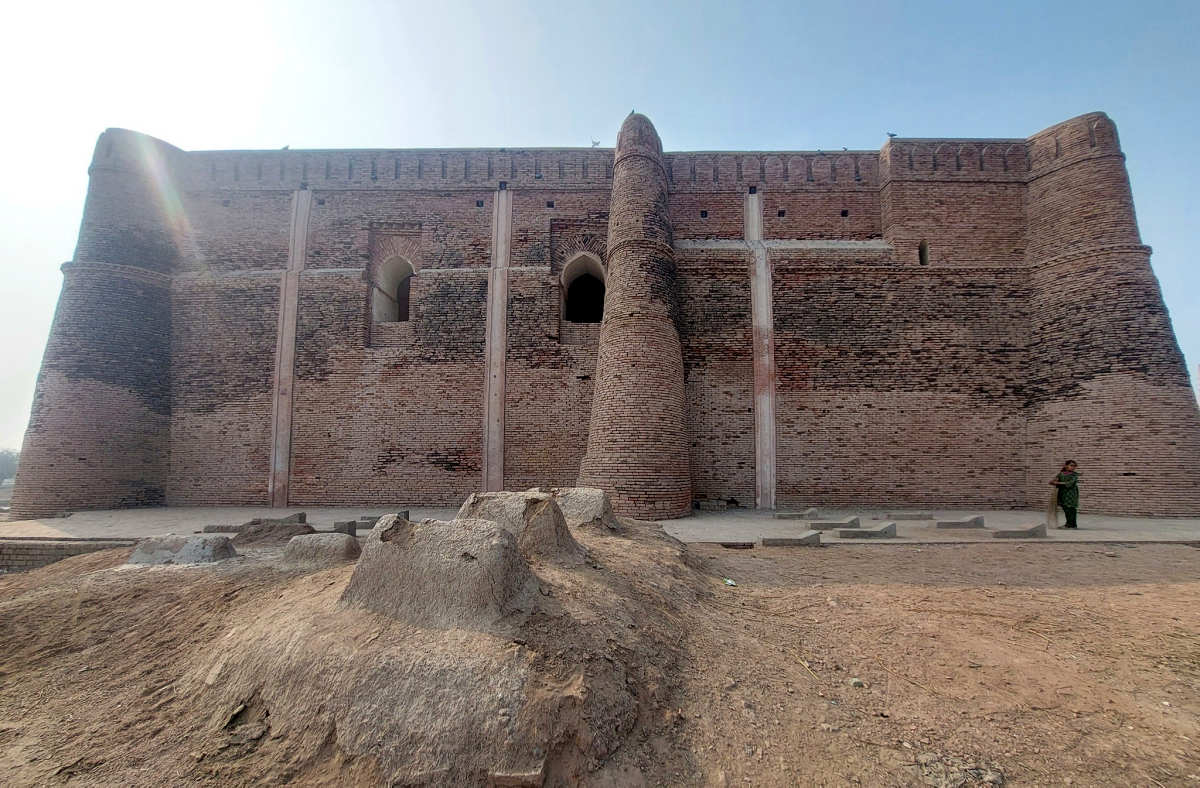
Another important historical and religious monument in Khanewal District is the Shrine of Khalid Walid, located near Kabirwala.
The shrine is regarded as an important example of early Muslim architecture in the region and is associated with the warrior-saint Khalid Walid.
The Municipal Committee Khanewal lists the shrine among the important places of the district. :contentReference[oaicite:11]{index=11}
The monument is particularly interesting for travelers interested in the development of Islamic architecture in South Asia.
Other Historical Sites in Khanewal District
The district contains archaeological remains from several periods of South Asian history.
One example is Bara Qila, an archaeological settlement in Khanewal District associated with the Hindu-Buddhist period and dated by the Department of Archaeology and Museums to approximately the 1st to 5th centuries CE. :contentReference[oaicite:12]{index=12}
Such sites demonstrate that the history of the Khanewal region extends far beyond the development of the modern city.
City Park Khanewal
For a visitor spending time in the city itself, City Park is one of the principal recreational spaces.
The Municipal Committee describes City Park as being located in the center of Khanewal. :contentReference[oaicite:13]{index=13}
It is primarily a local recreational facility rather than a major historical monument, but it can be included in a short city tour.
How to Get to Khanewal from Lahore
Khanewal is approximately 300 kilometres from Lahore by road, depending on the route and starting point.
A private vehicle is the most flexible option for tourists because it allows stops at other destinations along the way.
The railway is another excellent option. Khanewal Junction is an important railway station with services connecting it to Lahore and numerous other Pakistani cities. :contentReference[oaicite:14]{index=14}
Travelers coming from Lahore can also combine Khanewal with a visit to Multan.
How to Get to Khanewal from Islamabad
Khanewal is approximately 465 kilometres from Islamabad by road. Current route information places the driving distance at around 467 kilometres. :contentReference[oaicite:15]{index=15}
The drive generally takes around 6 hours, depending on traffic, route and stops.
Rail travel is also possible from Khanewal Junction, making the city convenient for travelers who prefer to travel overland by train.
How to Get to Khanewal from Karachi
Khanewal is approximately 900 kilometres from Karachi by road, depending on the route.
Because Khanewal is located on the main railway corridor between Karachi and northern Pakistan, rail travel can be a particularly practical option for visitors coming from Sindh.
Travelers arriving from Karachi can combine Khanewal with Multan, Bahawalpur and other destinations in southern Punjab.
Distance to Khanewal from Major Cities
| Starting City | Approximate Distance | Approximate Travel Time |
|---|---|---|
| Lahore | 300 km | About 4–5 hours |
| Islamabad | 467 km | About 6 hours |
| Karachi | 900 km | About 11–13 hours |
| Multan | 55 km | About 1 hour |
| Faisalabad | 130 km | About 2 hours |
| Jhang | 100 km | About 2 hours |
| Vehari | 90 km | About 1.5–2 hours |
| Sahiwal | 100 km | About 1.5–2 hours |
Road distances are approximate and can vary according to the route and exact starting point. For planning purposes, visitors should confirm the route before departure.
Hotels in Khanewal
Khanewal has a number of local hotels and guesthouses suitable for travelers making a short visit or passing through the district.
For travelers looking for a larger choice of higher-standard accommodation, Multan is the nearest major city with a considerably wider hotel selection.
Travel & Culture Services can arrange accommodation in Khanewal, Multan or another suitable location depending on the itinerary and budget.
Hotel availability and standards can change, so advance confirmation is recommended, especially during busy travel periods.
How to Explore Khanewal in One Day
A one-day visit to Khanewal should focus on the city's railway heritage and local culture. If you have a full day and private transportation, you can also make an excursion toward Kabirwala or Tulamba.
Morning – Khanewal Railway Junction
Begin the day at Khanewal Junction. The railway is central to the history and development of the modern city.
Late Morning – Khanewal City
Drive through the central areas of the city, visit local markets and observe everyday life in this important agricultural town.
Midday – Lunch
Enjoy lunch at a local restaurant and try traditional Punjabi dishes.
Afternoon Option 1 – Tulamba
If you are interested in archaeology and history, drive toward Tulamba and explore the ancient settlement and remains of its historic fort.
Afternoon Option 2 – Kabirwala and Khalid Walid Shrine
Alternatively, travel toward Kabirwala and visit the historic Shrine of Khalid Walid.
Evening – Return to Khanewal
Return to Khanewal in the evening and continue to your hotel or onward destination.
Suggested One-Day Khanewal Itinerary
| Time | Activity |
|---|---|
| 08:00 | Breakfast and begin city tour |
| 09:00 | Khanewal Railway Junction |
| 10:00 | Explore central Khanewal and local bazaars |
| 12:00 | Lunch |
| 13:00 | Drive toward Tulamba or Kabirwala |
| 14:00 | Historical sightseeing |
| 16:30 | Return toward Khanewal |
| 18:00 | City Park / local sightseeing |
| 19:00 | Dinner and end of tour |
Khanewal, Tulamba and Kabirwala Tour
For a traveler with an interest in history, I recommend extending the Khanewal city visit into a Khanewal–Tulamba–Kabirwala excursion.
This combination brings together three very different aspects of the region: the modern railway history of Khanewal, the ancient archaeological heritage of Tulamba and the Islamic architectural heritage represented by the Khalid Walid Shrine.
Khanewal and Multan
Khanewal is only around 55 kilometres from Multan, making it easy to combine the two destinations.
Multan provides the major historic and religious attractions, including its famous Sufi shrines and historic architecture, while Khanewal provides a contrasting look at railway development, agriculture and canal-colony settlement.
A good itinerary could therefore be:
Lahore → Khanewal → Multan
or:
Lahore → Khanewal → Tulamba → Kabirwala → Multan

Local Culture and Food
Khanewal reflects the culture of southern and central Punjab. Agriculture remains an important part of the local economy, while the railway has historically contributed to the city's identity.
Visitors can try traditional Punjabi foods such as saag, roti, naan, daal, grilled meats, biryani, pulao, lassi and local sweets.
The local bazaars provide an opportunity to see everyday commercial life and sample regional foods.
Agriculture Around Khanewal
The district has a predominantly agricultural character. The official district profile reports more than 900,000 acres of cultivated area, with a substantial proportion of farmland benefiting from canal irrigation. :contentReference[oaicite:16]{index=16}
Cotton, wheat and other crops form part of the agricultural economy of the region, while livestock and related activities are also important.
The countryside around Khanewal is therefore particularly interesting for visitors who want to see the agricultural landscape that supports much of Punjab's economy.
Best Time to Visit Khanewal
The best months for visiting Khanewal are generally October through March, when temperatures are more comfortable for sightseeing.
Winter is particularly suitable for exploring Tulamba and other outdoor historical sites.
Summer can be extremely hot, so visitors should plan outdoor sightseeing during the morning and late afternoon.
Travel Tips for Khanewal
- Combine Khanewal with Multan for a stronger cultural itinerary.
- Visit Khanewal Railway Junction to understand the city's modern history.
- Allow additional time for Tulamba if you are interested in archaeology.
- Visit the Khalid Walid Shrine near Kabirwala for Islamic architectural heritage.
- Dress respectfully when visiting shrines and religious sites.
- Ask permission before photographing people or religious ceremonies.
- Private transportation is recommended for exploring Tulamba and rural areas.
- Carry drinking water during summer.
- Confirm accommodation before traveling.
Khanewal for Photographers
Khanewal offers photographers a different subject from the monumental architecture of Lahore or Multan.
The railway station, railway infrastructure, agricultural fields, canal landscapes, rural roads, bazaars and historic sites around the district offer opportunities for documentary and cultural photography.
Tulamba is particularly interesting for photographers interested in archaeology and historic landscapes.
Suggested Punjab Travel Routes Including Khanewal
Travelers coming from Lahore can follow:
Lahore → Khanewal → Multan
For a longer historical journey:
Lahore → Khanewal → Tulamba → Kabirwala → Multan → Bahawalpur
Another route can include the Sufi heritage of Punjab:
Lahore → Pakpattan → Khanewal → Kabirwala → Multan
Khanewal and the Wider District
Khanewal should not be viewed only as a city. The district contains four tehsils—Khanewal, Kabirwala, Mian Channu and Jahanian—and a large number of villages and agricultural settlements. :contentReference[oaicite:17]{index=17}
For a traveler interested in culture and history, the wider district provides considerably more opportunities than the city center alone.
Tour and Travel Arrangements in Khanewal
Travel & Culture Services can arrange private transportation, hotels, guides and customized tours to Khanewal and throughout Punjab.
We can arrange visits to Khanewal, Tulamba, Kabirwala, the Khalid Walid Shrine, Mian Channu, Multan, Pakpattan and other cultural destinations.
Khanewal can also be included in longer Pakistan tours covering Lahore, Faisalabad, Multan, Bahawalpur, Cholistan and southern Punjab.
For any help or arrangement for tours in Khanewal, Punjab or anywhere in Pakistan, please contact Travel & Culture Services.
Frequently Asked Questions About Khanewal
Where is Khanewal located?
Khanewal is located in southern Punjab, Pakistan, and is the headquarters of Khanewal District.
What is Khanewal famous for?
Khanewal is particularly famous for its railway junction, agricultural economy and canal-colony history. The wider district is also known for Tulamba and the Shrine of Khalid Walid.
What is Khanewal Railway Junction?
Khanewal Junction is a major railway station and junction connecting important railway routes across Pakistan. The official district website lists routes connecting Khanewal with cities including Karachi, Lahore, Rawalpindi, Peshawar, Quetta, Multan and Faisalabad. :contentReference[oaicite:18]{index=18}
What is Tulamba?
Tulamba is an ancient settlement in Khanewal District. The District Khanewal website describes it as more than 2,500 years old and notes archaeological evidence from several historical periods. :contentReference[oaicite:19]{index=19}
Where is the Shrine of Khalid Walid?
The Shrine of Khalid Walid is located near Kabirwala in Khanewal District and is an important religious and architectural monument of the region. :contentReference[oaicite:20]{index=20}
How far is Khanewal from Lahore?
Khanewal is approximately 300 kilometres from Lahore by road, depending on the route.
How far is Khanewal from Islamabad?
Khanewal is approximately 467 kilometres from Islamabad by road. Current route information gives a driving distance of about 467 kilometres. :contentReference[oaicite:21]{index=21}
How far is Khanewal from Karachi?
Khanewal is approximately 900 kilometres from Karachi by road, depending on the selected route.
Can Khanewal be visited as a day trip from Lahore?
Yes. Khanewal can be visited from Lahore as a long day trip, particularly by road or train. However, travelers who want to include Tulamba and Kabirwala should consider staying overnight.
Is Khanewal worth visiting for foreign tourists?
Khanewal is most suitable for travelers interested in railway history, rural Punjab, agriculture, archaeology, religious heritage and destinations away from Pakistan's main tourist centers.
Can Travel & Culture arrange a Khanewal tour?
Yes. Travel & Culture Services can arrange transportation, hotels, guides and customized tours to Khanewal, Tulamba, Kabirwala, Multan and other destinations in Pakistan.



Advertisement
Advertise on this site click for advertising rates