
Mohabbat Khan Mosque, Peshawar
The Mohabbat Khan Mosque, built in 1630 during the Mughal era, is one of the most iconic landmarks of Peshawar, Pakistan. Named after the Mughal governor Mahabat Khan Kamboh, this mosque is renowned for its striking white marble façade, fluted domes, and intricately decorated minarets. Standing on one of the highest points in the old city, it has served as both a spiritual and cultural hub for centuries.

History of Mohabbat Khan Mosque
Constructed between 1660 and 1670, the mosque was strategically built on elevated ground, overlooking the old city of Peshawar. Throughout history, its minarets were used during the Sikh period as sites for hanging prisoners, while during the Soviet invasion of Afghanistan, Afghan tribal elders would gather here to unite against foreign forces. Today, the mosque is a peaceful sanctuary and a testament to Peshawar’s rich Mughal heritage.
Architecture and Layout
The mosque covers an area of approximately 30,155 square feet. Its open courtyard features a central ablution pool and is surrounded by a single row of rooms lining the perimeter. The main prayer hall, on the west side, is flanked by two tall minarets divided into three sections each, and capped by three fluted domes. Six smaller decorative minarets adorn the façade, complementing the mosque's five arched entryways.
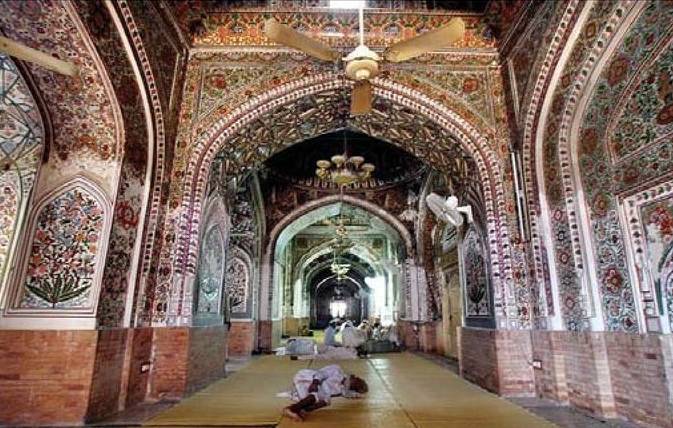
The central arched portal, the tallest of the five, displays cusped arches typical of Mughal architecture, while the adjacent arches show Persian and Central Asian design influences. Above each arch is a row of seven smaller arches, decorated with muqarnas and ghalib kari plasterwork. Both interior and exterior surfaces feature elegant floral motifs and Quranic calligraphy, with colorful vegetal designs enhancing the arches.
Visiting Mohabbat Khan Mosque
Visitors can walk through the mosque’s expansive courtyard, admire the detailed marble work, and enter the prayer hall to witness the exquisite floral and geometric patterns beneath the three domes. The mosque is open to tourists outside prayer times and provides excellent photography opportunities of Mughal-era craftsmanship.
Nearby Attractions
- Peshawar Museum – Gandhara art and Buddhist artifacts.
- Islamia College – Historic educational landmark.
- Khyber Gate – Entrance to the legendary Khyber Pass.
Travel Tips
- Best visiting hours: Early morning or late afternoon to avoid midday crowds.
- Dress modestly when entering the mosque.
- Guided tours provide insights into the architecture and historical significance.
- Combine your visit with nearby bazaars and historical sites in Peshawar for a full-day tour experience.
Gallery
More Peshawar Tours
Travel & Culture Services Pakistan
| Home | Tours | Contact Information

Advertisement
Advertise on this site click for advertising rates