
Multan Clock Tower – The Heart of the City
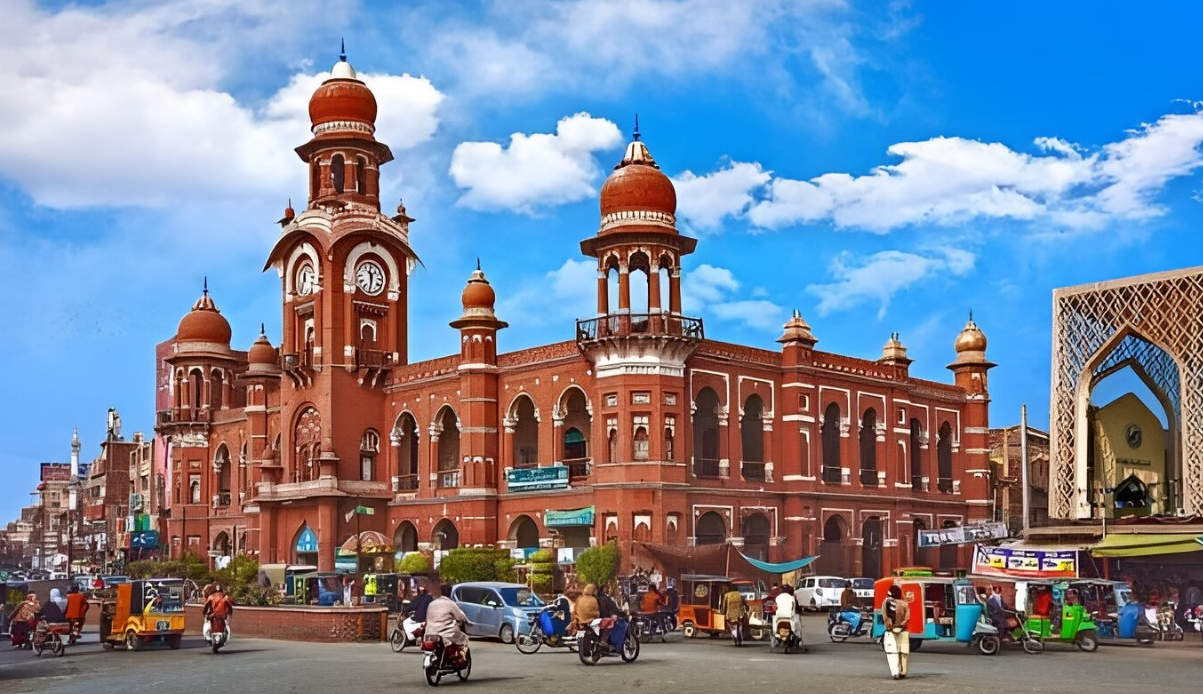
Multan, widely known as the City of Saints, is home to many historic monuments and spiritual landmarks. At the very heart of the city stands one of its most recognizable symbols — the Multan Clock Tower, locally known as Ghanta Ghar. This historic structure has witnessed generations of history and remains a central landmark of the city.
Historical Background
The construction of the clock tower began in 1884 and was completed in 1888 during the British colonial period. Originally called the Northbrook Tower, the building was constructed as part of the British administrative development of the city. Built with distinctive red bricks, the tower represents the Indo-Saracenic architectural style that combines elements of Islamic and European design.
Interestingly, the site of the present clock tower once held the residence of Ali Muhammad Khan Sadozai. The mansion was destroyed during the historic Siege of Multan in 1848–49. Later, the area was developed as the headquarters of the Municipal Committee, which still functions nearby as an important administrative center of the city.
Architectural Features
The Multan Clock Tower stands tall with elegant arches, decorative brickwork, and a prominent tower that dominates the surrounding skyline. Its architectural design reflects the Indo-Saracenic style commonly used in public buildings during the late 19th century.
- Constructed with red brick masonry.
- Distinctive tower structure with clock faces.
- Arched openings and colonial architectural details.
- Central landmark at the historic crossroads of Multan.
The Cultural Heart of Multan
Ghanta Ghar Chowk is far more than a historic building — it is the vibrant heartbeat of Multan. Several of the city’s oldest bazaars radiate from this central square, including the famous Hussain Agahi Bazaar. These traditional markets continue to reflect the colors, commerce, and daily life of the city.
In the evening, when the tower is illuminated and the surrounding markets are bustling with activity, the atmosphere captures the spirit of old Multan where past and present meet.
Nearby Historical Landmarks
A short distance from the clock tower are some of Multan’s most important spiritual sites, including the shrines of Bahauddin Zakariya, Shah Rukn-e-Alam, and Shah Shams Tabrez. Together with these sacred monuments, the clock tower forms an important part of the historical, cultural, and spiritual identity of Multan.
Today, the Multan Clock Tower continues to stand proudly as a symbol of the city’s history, connecting its colonial past with the vibrant life of modern Multan.

Advertisement
Advertise on this site click for advertising rates