
The Tomb of Emperor Jahangir
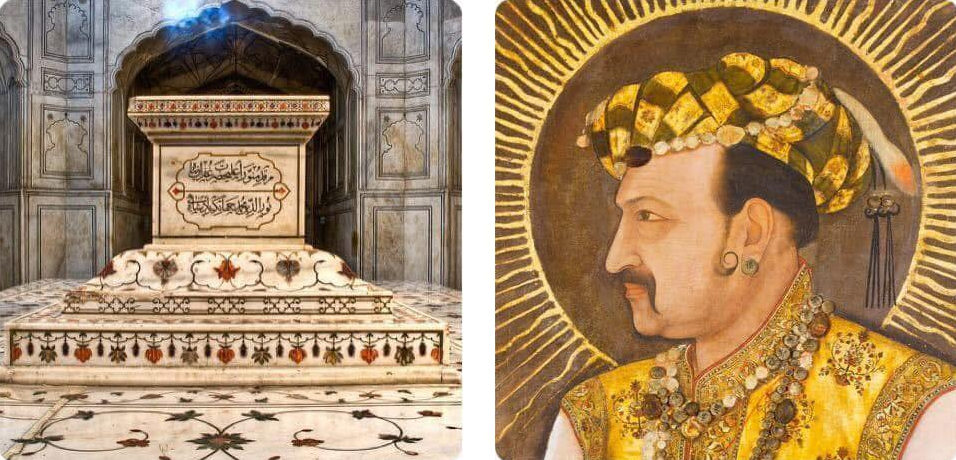
Nur-ud-din Muhammad Salim, better known as Emperor Jahangir (31 August 1569 – 28 October 1627), ruled the Mughal Empire from 1605 until his death in 1627. He holds a unique place in Mughal history, as he is one of the few great Mughal emperors not buried in India, alongside the founder of the empire, Babur, who rests in Kabul.
The Final Journey of the Emperor
In his later years, Jahangir suffered from ill health. Royal physicians advised him to travel to the cooler climates of Kabul and Kashmir for recovery. However, the harsh cold of Kashmir forced him to move toward Lahore. Tragically, he passed away on 28 October 1627 in the foothills near Rajauri while on his journey.
His body was transported in a royal funeral procession from Kashmir to Lahore, arriving on Friday, 12 November 1627. He was laid to rest in the beautiful Dilkusha Garden, a place he deeply cherished along with his wife, Empress Nur Jahan.
Construction of the Mausoleum
Following his death, his son and successor, Emperor Shah Jahan, ordered the construction of a grand mausoleum worthy of an emperor. There remains some historical debate regarding the supervision of the design, with many attributing it either to Nur Jahan or to Shah Jahan himself—both known for their refined architectural taste.
The tomb stands today as one of the finest examples of Mughal art and architecture. The structure is adorned with intricate inlay work using precious and semi-precious stones. The ninety-nine names (attributes) of Allah are beautifully engraved, adding spiritual depth to the monument.
Architectural Significance
The Tomb of Jahangir is a masterpiece that reflects the elegance and sophistication of Mughal design. Unlike many other Mughal tombs, it does not feature a large central dome but instead emphasizes detailed surface decoration, symmetry, and garden layout, following the Persian-inspired Charbagh style.
The surrounding gardens, waterways, and geometric planning create a serene atmosphere, making it not just a burial place but a symbol of artistic excellence and imperial grace.
Historical Damage and Restoration
Over time, the tomb suffered significant damage. During the reign of Maharajah Ranjit Singh, many of its decorative elements were removed and reportedly transported to Amritsar for use in a Sikh temple.
Later, the site was used as a residence by a Sikh army officer of Spanish origin, and further damage was inflicted by Sultan Muhammad Khan, brother of Dost Muhammad Khan of Kabul. These events led to the deterioration of the monument, although efforts have since been made to preserve its historical value.
Visit Jahangir’s Tomb with Travel & Culture
The Tomb of Jahangir remains one of the most important Mughal heritage sites in Lahore and is a must-visit for history lovers and cultural travelers.
The Travel & Culture Mughal Heritage Tour of Lahore includes a visit to Jahangir’s Tomb as part of its carefully curated itinerary. This tour offers a deep insight into the grandeur of Mughal architecture and the rich history of Lahore.
You can book the tour here:
https://www.travel-culture.com/tours/
Conclusion
The Tomb of Jahangir stands as a timeless reminder of Mughal artistry, history, and cultural richness. Despite the damage it endured over centuries, it continues to attract visitors from around the world who come to admire its beauty and reflect on the legacy of one of the Mughal Empire’s most fascinating rulers.



Advertisement
Advertise on this site click for advertising rates