

Mandi Bahauddin Pakistan Travel Guide – History, Hydaspes Battlefield, Chillianwala and Rasul Barrage
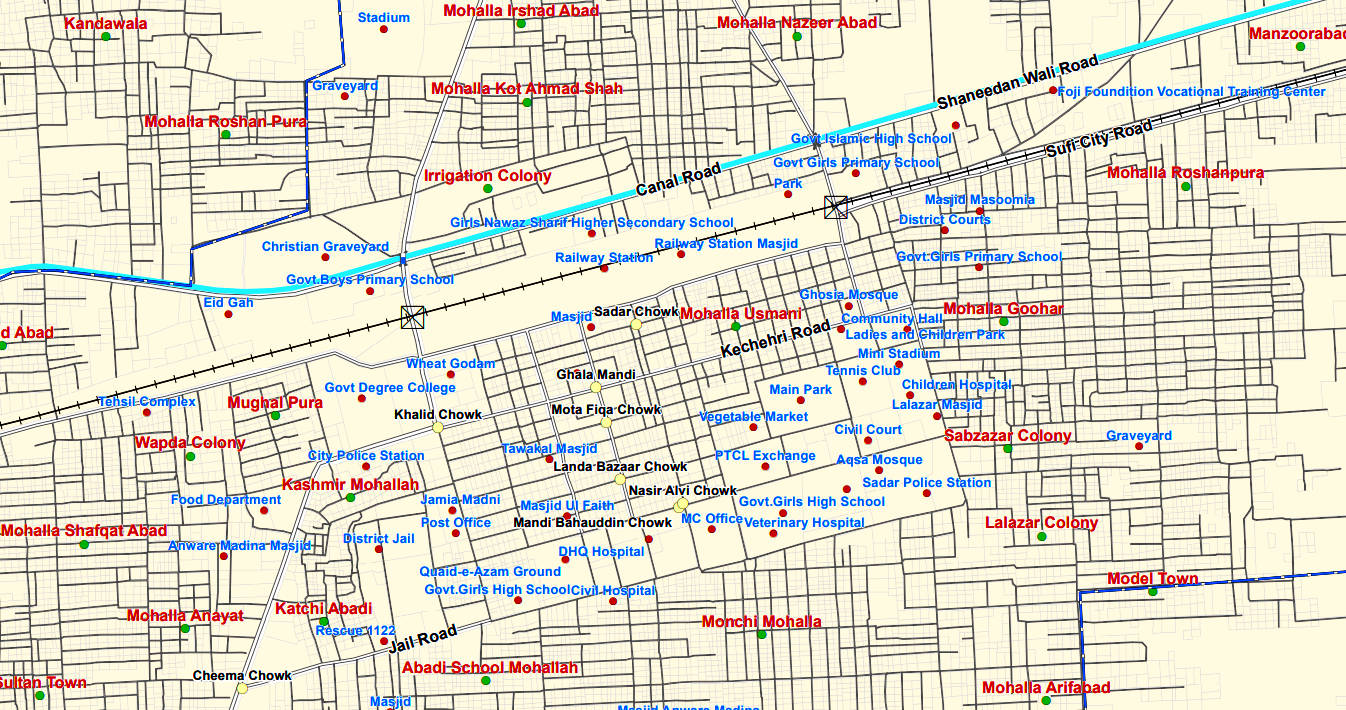
Mandi Bahauddin is a historic city in central Punjab, Pakistan, and the administrative headquarters of Mandi Bahauddin District. The city occupies an interesting position in the Chaj Doab, the fertile area between the Jhelum and Chenab rivers. The district government describes the Jhelum as lying about 12 kilometres to the north and the Chenab about 39 kilometres to the south. :contentReference[oaicite:1]{index=1}
For travelers interested in the deeper history of Punjab, Mandi Bahauddin is particularly rewarding. The surrounding district is associated with the Battle of Hydaspes between Alexander the Great and Raja Porus in 326 BC, the Battle of Chillianwala in 1849, the historic towns of Phalia and Malakwal, and the impressive Rasul Barrage on the Jhelum River. :contentReference[oaicite:2]{index=2}
Mandi Bahauddin is ideal for travelers who enjoy historical battlefields, ancient Punjab, railway heritage, rivers, agriculture and places that lie away from the conventional tourist routes.
Where is Mandi Bahauddin?
Mandi Bahauddin is situated in central Punjab between the Jhelum and Chenab rivers. The wider district consists of three tehsils: Mandi Bahauddin, Phalia and Malakwal. :contentReference[oaicite:3]{index=3}
The district forms part of the historic Chaj Doab, one of the fertile inter-river regions of Punjab. Its agricultural landscape is dominated by crops including wheat, rice, sugarcane, maize and fodder. :contentReference[oaicite:4]{index=4}
A Brief History of Mandi Bahauddin
The historical story of Mandi Bahauddin extends far beyond the modern city. According to the district government's historical account, the area around present-day Mandi Bahauddin was involved in one of the most famous military encounters of the ancient world: the Battle of Hydaspes in 326 BC.
The district government places the battlefield near Mong village, on the southern bank of the Jhelum River, approximately eight kilometres northwest of modern Mandi Bahauddin. The battle was fought between Alexander the Great and Raja Porus. :contentReference[oaicite:5]{index=5}
Centuries later, another major battle took place in the district at Chillianwala in 1849 during the Second Anglo-Sikh War. The British victory in that conflict contributed to the eventual annexation of Punjab by the British. A British cemetery associated with the battlefield remains locally known as Gora Qabrastan. :contentReference[oaicite:6]{index=6}
The history of the present town itself is more recent. The district's official history traces the old settlement of Pindi Bahauddin to Hazrat Bahauddin, who established a village in the area around 1506. The settlement subsequently developed into the modern town. :contentReference[oaicite:7]{index=7}
During British rule, the construction of canals, railways and planned agricultural settlements transformed the region. The Lower Jhelum Canal was opened in 1902, while the railway infrastructure helped connect the area with other parts of Punjab. :contentReference[oaicite:8]{index=8}
A major grain market was established in the growing town, and in 1920 the settlement was officially notified as Mandi Bahauddin. It later became a town committee in 1937 and a municipal committee in 1941. :contentReference[oaicite:9]{index=9}
Mandi Bahauddin became a separate district on 1 July 1993. :contentReference[oaicite:10]{index=10}
The Battle of Hydaspes – Alexander the Great and Raja Porus
One of the strongest reasons for visiting the Mandi Bahauddin region is its association with the Battle of Hydaspes.
In 326 BC, Alexander the Great fought Raja Porus on the banks of the Jhelum River, known to the Greeks as the Hydaspes. The battle was one of Alexander's final major military engagements.
The Mandi Bahauddin district government identifies Mong, approximately eight kilometres northwest of the modern city, as the location associated with the battlefield. :contentReference[oaicite:11]{index=11}
For anyone interested in Alexander the Great and the ancient history of Pakistan, this is a fascinating area to visit because the surrounding landscape remains predominantly agricultural and rural.
Mong and the Ancient Hydaspes Battlefield
Mong is a small settlement northwest of Mandi Bahauddin associated with the Battle of Hydaspes.
A visit to the area is best understood as a historical landscape experience rather than a conventional archaeological attraction. The traveler can combine the visit with the Jhelum River and other historical locations in the district.
The precise identification of ancient battlefield locations should be treated with appropriate historical caution, but the area around Mong remains strongly associated with the traditional identification of the battlefield in the district's official historical narrative. :contentReference[oaicite:12]{index=12}
Battle of Chillianwala
Chillianwala is another major historical site in Mandi Bahauddin District.
In January 1849, British and Sikh forces fought a major battle here during the Second Anglo-Sikh War. The battle was extremely costly and became one of the most remembered encounters of the British conquest of Punjab.
The district government identifies the battlefield as an important part of local history and notes that the Gora Qabrastan, or British cemetery, remains as a monument to those who died in the battle. :contentReference[oaicite:13]{index=13}

Rasul Barrage
Rasul Barrage is one of the most important attractions in the Mandi Bahauddin region.
The barrage stands on the Jhelum River, between Mandi Bahauddin and Jhelum districts. The present structure was constructed in 1968 and is used for controlling river water for irrigation and flood management. :contentReference[oaicite:14]{index=14}
Rasul Barrage is approximately 72 kilometres downstream from Mangla Dam and is connected with the wider irrigation system of Punjab. :contentReference[oaicite:15]{index=15}
For tourists, the attraction is not only the engineering structure itself but also the surrounding Jhelum River landscape.

Rasul-Qadirabad Link Canal
The development of the Rasul area is closely connected with the large irrigation projects of modern Pakistan.
The Rasul Barrage and Rasul-Qadirabad Link Canal project was undertaken as part of the Indus Basin irrigation development. According to the district's official history, construction began in 1963 and the project was completed in 1968. :contentReference[oaicite:16]{index=16}
The project contributed significantly to the economic development and visibility of Mandi Bahauddin.
Malakwal Junction Railway Station
Malakwal Junction is one of the most interesting railway heritage sites in the district.
The railway station was established by the British in 1901 as part of the North Western Railway system. Its position helped connect the agricultural region with important commercial and industrial centers. :contentReference[oaicite:17]{index=17}
Malakwal's railway importance also grew because the line provided access toward the Salt Range and the salt mines around Khewra. :contentReference[oaicite:18]{index=18}
For railway enthusiasts, Malakwal can be added to a historical tour of Mandi Bahauddin District.

Phalia
Phalia is one of the three tehsils of Mandi Bahauddin District and is a town with a particularly interesting ancient history.
The area has traditionally been associated with Bucephala, one of the settlements said to have been founded by Alexander the Great after the Battle of Hydaspes and named after his famous horse Bucephalus. The district's official tourism material also connects Phalia with this historical tradition. :contentReference[oaicite:19]{index=19}
Phalia is therefore an excellent addition to an itinerary focused on Alexander's campaign in the Punjab.

Gurdwara Kair Bawa
The district also contains heritage associated with the Sikh period of Punjab.
Gurdwara Kair Bawa is listed by the Mandi Bahauddin district government among its important places. The site is traditionally associated with the period of Maharaja Ranjit Singh and contains architectural features including a baradari and decorative elements. :contentReference[oaicite:20]{index=20}
The site provides another perspective on the multicultural history of the Punjab before Partition.

Mandi Bahauddin and the Chaj Doab
Mandi Bahauddin occupies the heart of the Chaj Doab, the land between the Chenab and Jhelum rivers.
This geography is fundamental to understanding the region. The rivers brought fertile soils and water, while British-era canals transformed large areas into productive agricultural land.
Today visitors driving through the district encounter extensive wheat, rice, sugarcane, maize and fodder fields, together with villages and irrigation channels. :contentReference[oaicite:21]{index=21}
Local Culture of Mandi Bahauddin
Mandi Bahauddin has a predominantly rural cultural character, although the district headquarters itself is a busy commercial center.
The district government describes local traditions as relatively conservative and emphasizes the hospitality of its people. Baisakhi is traditionally celebrated in April around the beginning of the wheat harvest. :contentReference[oaicite:22]{index=22}
Traditional clothing, agricultural festivals, embroidery, woodwork and rural sports remain part of the local cultural landscape.
How to Get to Mandi Bahauddin from Lahore
Mandi Bahauddin is approximately 200 kilometres from Lahore by road, depending on the route.
One convenient approach is via the motorway and roads connecting toward the Mandi Bahauddin area. Another scenic option is to approach through the Gujrat and Jhelum region.
For a private historical tour, we recommend allowing time for Chillianwala, Rasul Barrage and Phalia rather than treating Mandi Bahauddin simply as a transit destination.
How to Get to Mandi Bahauddin from Islamabad
Mandi Bahauddin is approximately 170 kilometres from Islamabad by road.
The city is relatively accessible from Islamabad and Rawalpindi. Roads approaching from the Jhelum and Gujrat side provide access to the district.
Mandi Bahauddin can therefore make a convenient historical excursion from Islamabad, particularly when combined with Jhelum, Rasul Barrage or the Salt Range.
How to Get to Mandi Bahauddin from Karachi
Mandi Bahauddin is approximately 1,100 kilometres from Karachi by road, depending on the route.
For travelers coming from Karachi, it is more practical to include Mandi Bahauddin within a longer Punjab itinerary rather than travel there exclusively.
A possible route is:
Karachi → Multan → Lahore → Mandi Bahauddin
Alternatively, the journey can be combined with Bahawalpur, Lahore, Gujrat and the Salt Range.
Distance to Mandi Bahauddin from Major Cities
| Starting City | Approximate Distance | Approximate Road Time |
|---|---|---|
| Lahore | 200 km | About 3–4 hours |
| Islamabad | 170 km | About 3 hours |
| Karachi | 1,100 km | About 14–16 hours |
| Gujranwala | 90 km | About 1.5–2 hours |
| Gujrat | 45 km | About 1 hour |
| Jhelum | 40 km | About 1 hour |
| Sargodha | 100 km | About 2 hours |
| Faisalabad | 160 km | About 3 hours |
All distances and travel times are approximate and can vary according to the starting point, road conditions and route selected.
Traveling to Mandi Bahauddin by Train
Mandi Bahauddin has an important railway history dating from the British period. The railway network played a major role in the development of the town and its agricultural economy.
Malakwal Junction remains particularly significant because it was historically an important railway junction in the region. :contentReference[oaicite:23]{index=23}
Travelers interested in railway heritage can therefore combine Mandi Bahauddin with Malakwal during their visit.
Hotels in Mandi Bahauddin
Mandi Bahauddin has a number of local hotels and guesthouses suitable for short stays. Travelers seeking a greater choice of accommodation may also consider nearby Gujrat, Jhelum or Islamabad, depending on their itinerary.
For a private cultural tour, Travel & Culture Services can arrange accommodation according to the preferred budget and standard of the traveler.
How to Explore Mandi Bahauddin in One Day
Mandi Bahauddin can be explored as a full-day historical excursion. Because the most interesting attractions are spread across the district, private transportation is recommended.
08:00 – Arrival and Breakfast
Begin your day in Mandi Bahauddin with breakfast and an introduction to the history of the city.
09:00 – Explore Mandi Bahauddin
Explore the central city and learn about its development as a British-era planned town and agricultural market.
10:00 – Chillianwala
Drive toward Chillianwala and visit the area associated with the 1849 Anglo-Sikh battle.
12:00 – Rasul Barrage
Continue toward Rasul Barrage and enjoy the Jhelum River landscape.
13:30 – Lunch
Have lunch at a local restaurant or return toward Mandi Bahauddin.
15:00 – Mong / Hydaspes Region
Visit the area around Mong, associated with the traditional location of the Battle of Hydaspes.
16:30 – Phalia or Malakwal
Depending on the available time, continue toward Phalia or Malakwal. Railway enthusiasts may prefer Malakwal Junction.
18:30 – Return
Return to Mandi Bahauddin or continue toward Jhelum, Gujrat or Lahore.
Suggested One-Day Mandi Bahauddin Itinerary
| Time | Activity |
|---|---|
| 08:00 | Breakfast and begin city tour |
| 09:00 | Mandi Bahauddin city and historic center |
| 10:00 | Drive to Chillianwala |
| 11:30 | Chillianwala battlefield area |
| 12:30 | Travel toward Rasul Barrage |
| 13:15 | Rasul Barrage and Jhelum River |
| 14:00 | Lunch |
| 15:00 | Mong and Hydaspes historical area |
| 16:30 | Phalia or Malakwal |
| 18:30 | Return / onward journey |
Two-Day Mandi Bahauddin Historical Tour
Travelers interested in history should ideally allow two days.
Day 1: Mandi Bahauddin city, Chillianwala, Rasul Barrage and Jhelum River.
Day 2: Mong and the Hydaspes region, Phalia, Malakwal Junction and Gurdwara Kair Bawa.
This slower itinerary allows more time for photography, local interaction and exploration of the rural landscape.
Mandi Bahauddin as a Historical Destination
Mandi Bahauddin is particularly attractive because several layers of Punjab's history can be explored within one district.
- Ancient history: Battle of Hydaspes and Alexander the Great.
- Medieval history: Old settlements and religious traditions.
- Sikh history: Heritage sites associated with the Sikh period.
- British history: Chillianwala battlefield and railway infrastructure.
- Modern Pakistan: Rasul Barrage and the Indus Basin irrigation system.
Photography in Mandi Bahauddin
The district offers excellent opportunities for documentary and landscape photography.
The combination of Jhelum River scenery, agricultural fields, old railway stations, village life, battlefields and historic religious buildings makes Mandi Bahauddin quite different from the major cities of Pakistan.
Early morning and late afternoon are particularly suitable for photographing the agricultural landscape and river areas.

Best Time to Visit Mandi Bahauddin
The best months for sightseeing are generally October to March, when temperatures are more comfortable.
The summer months can be very hot, particularly during June and July. Outdoor sightseeing should then be planned for early morning and late afternoon.
Spring can also be attractive because the agricultural landscape becomes particularly green.
Travel Tips for Mandi Bahauddin
- Allow at least one full day for the main attractions.
- Two days are better for exploring the wider district.
- Private transportation is recommended for Chillianwala, Mong and Rasul Barrage.
- Carry drinking water during summer.
- Wear comfortable shoes for historical sites.
- Ask locally before photographing military or sensitive infrastructure.
- Dress respectfully when visiting religious sites.
- Check access conditions before visiting lesser-known historical locations.
- Combine Mandi Bahauddin with Jhelum, Gujrat or the Salt Range for a longer tour.
Nearby Destinations
Mandi Bahauddin's location makes it an excellent base or stopover for exploring several destinations in northern and central Punjab.
- Jhelum – historic city on the Jhelum River.
- Gujrat – historic city south of Mandi Bahauddin.
- Rohtas Fort – spectacular 16th-century fort near Jhelum.
- Khewra Salt Mines – famous salt mine in the Salt Range.
- Katas Raj Temples – important Hindu heritage complex in the Salt Range.
- Gujranwala – major city associated with Sikh and Punjabi history.
- Sargodha – important agricultural and citrus-producing region.
Suggested Punjab Tour Including Mandi Bahauddin
Historical Punjab Route:
Lahore → Gujranwala → Mandi Bahauddin → Chillianwala → Jhelum → Rohtas Fort → Islamabad
Alexander the Great Route:
Islamabad → Taxila → Jhelum → Mong / Hydaspes → Phalia → Mandi Bahauddin → Lahore
Salt Range and Heritage Route:
Lahore → Gujrat → Mandi Bahauddin → Jhelum → Rohtas Fort → Khewra Salt Mines → Katas Raj → Islamabad
Why Include Mandi Bahauddin in a Pakistan Tour?
Mandi Bahauddin is not a conventional mass-tourism destination, and that is precisely what makes it interesting.
For visitors who want to understand the history of Punjab beyond Lahore and the major monuments, the district offers a fascinating combination of Alexander's campaign, Sikh-British conflicts, British railway history, irrigation engineering and traditional rural Punjab.
The city also provides a useful link between the historic cities of Lahore, Gujranwala and Gujrat and the Jhelum and Salt Range region.
Tour and Travel Arrangements in Mandi Bahauddin
Travel & Culture Services can arrange private transportation, accommodation, guides and customized historical and cultural tours to Mandi Bahauddin and other destinations throughout Punjab and Pakistan.
We can arrange visits to Mandi Bahauddin, Chillianwala, Mong, Rasul Barrage, Phalia, Malakwal, Jhelum, Rohtas Fort and the Salt Range.
For international visitors, the destination can be incorporated into customized Pakistan tours covering Lahore, Islamabad, Taxila, Punjab's historic sites and northern Pakistan.
For any help or arrangement for tours in Mandi Bahauddin, Punjab or anywhere in Pakistan, please contact Travel & Culture Services.
Frequently Asked Questions About Mandi Bahauddin
Where is Mandi Bahauddin located?
Mandi Bahauddin is located in central Punjab, Pakistan, in the Chaj Doab between the Jhelum and Chenab rivers. :contentReference[oaicite:24]{index=24}
What is Mandi Bahauddin famous for?
Mandi Bahauddin is famous for its ancient history, the Battle of Hydaspes, Chillianwala battlefield, Rasul Barrage, Phalia, Malakwal Junction and its agricultural landscape.
What happened at the Battle of Hydaspes?
The Battle of Hydaspes was fought in 326 BC between Alexander the Great and Raja Porus. The Mandi Bahauddin district government associates the battlefield with the area around Mong on the southern bank of the Jhelum River. :contentReference[oaicite:25]{index=25}
What is Chillianwala famous for?
Chillianwala was the site of a major battle between Sikh and British forces in 1849 during the Second Anglo-Sikh War. The battlefield is associated with a British cemetery locally known as Gora Qabrastan. :contentReference[oaicite:26]{index=26}
What is Rasul Barrage?
Rasul Barrage is a major barrage on the Jhelum River between Mandi Bahauddin and Jhelum districts. The present structure was built in 1968 and serves irrigation and flood-control purposes. :contentReference[oaicite:27]{index=27}
What can I see in Mandi Bahauddin in one day?
A good one-day itinerary can include Mandi Bahauddin city, Chillianwala, Rasul Barrage and the Mong/Hydaspes area. If time permits, Phalia or Malakwal can also be added.
How far is Mandi Bahauddin from Lahore?
Mandi Bahauddin is approximately 200 kilometres from Lahore by road, depending on the route.
How far is Mandi Bahauddin from Islamabad?
Mandi Bahauddin is approximately 170 kilometres from Islamabad by road.
How far is Mandi Bahauddin from Karachi?
Mandi Bahauddin is approximately 1,100 kilometres from Karachi by road, depending on the route.
Can Mandi Bahauddin be visited from Islamabad?
Yes. Mandi Bahauddin is within practical driving distance of Islamabad and can be visited as part of a historical excursion covering Jhelum, Rasul Barrage, Chillianwala and the surrounding area.
Can Travel & Culture arrange a Mandi Bahauddin tour?
Yes. Travel & Culture Services can arrange transportation, hotels, guides and customized tours to Mandi Bahauddin and other destinations in Punjab and Pakistan.



Advertisement
Advertise on this site click for advertising rates